
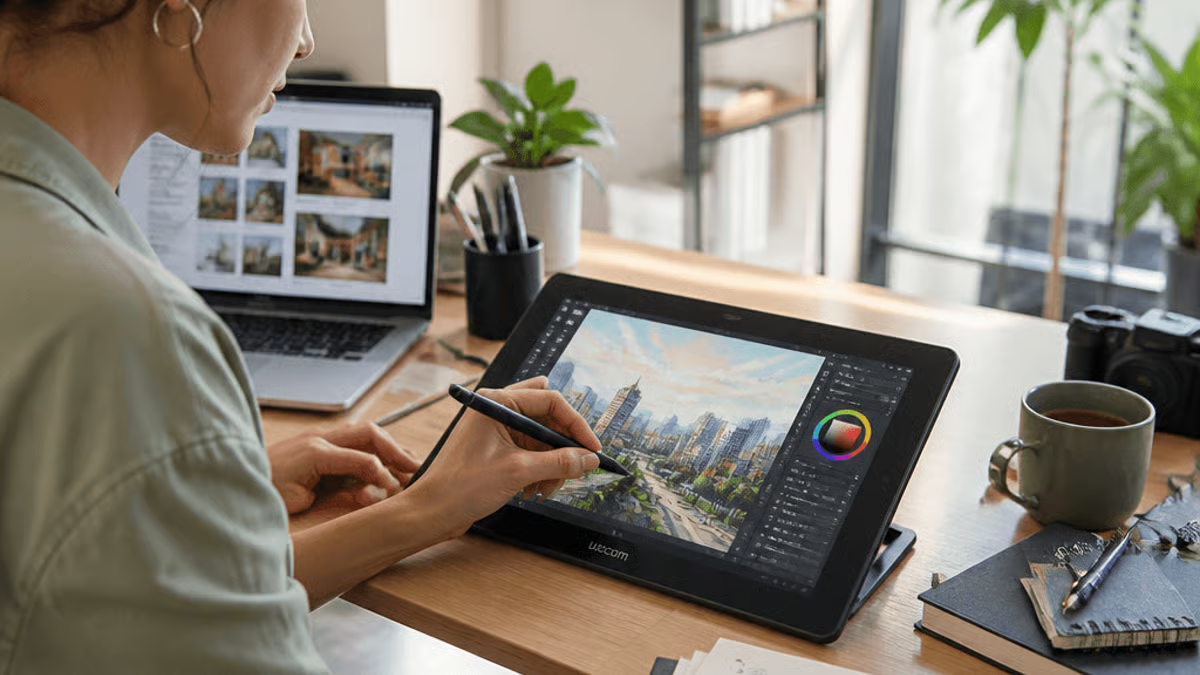
Wacom is making a play for the mid-tier digital art market with its Movinkpad 11, a graphics tablet designed to lower the barrier for aspiring creators. The device arrives as graphics tablets have become essential tools for remote work and digital content creation, with the market expected to hit $2.8 billion by 2027. For artists who’ve been priced out of Wacom’s premium Cintiq line but want more than entry-level options, this could be the sweet spot they’ve been waiting for.
Wacom just threw down a gauntlet in the increasingly crowded graphics tablet market. The company’s new Movinkpad 11 represents a strategic shift for a brand that’s long dominated the premium end of digital art tools but watched competitors chip away at the budget-conscious creator segment.
The timing makes sense. Digital art tools have exploded from niche professional equipment to mainstream creative necessities. Between the rise of digital illustration on platforms like Instagram and ArtStation, the boom in remote design work, and the growing creator economy, more people than ever are looking for capable drawing tablets that won’t drain their savings.
Wacom has historically owned the high end with its Cintiq displays and Intuos Pro tablets, devices that can easily run $1,000 to $3,000. But brands like XP-Pen, Huion, and even Apple with the iPad have been eating into what was once Wacom’s exclusive territory. The Movinkpad 11 appears designed to defend that middle ground – capable enough for serious work, affordable enough for hobbyists and students.
The 11-inch form factor is telling. It’s portable without being cramped, big enough for detailed work but small enough to toss in a backpack. That matters in an era where creators are increasingly mobile, working from coffee shops, co-working spaces, or splitting time between home offices and studio spaces.
What we don’t know yet is how Wacom has balanced the inevitable compromises. Mid-priced tablets typically cut corners somewhere – pressure sensitivity levels, screen quality, build materials, or included software. Wacom‘s challenge is maintaining enough of its premium DNA to justify its brand premium while hitting a price point that actually moves units.
The graphics tablet market has become surprisingly competitive. Chinese manufacturers have gotten remarkably good at producing capable hardware at aggressive prices. Apple‘s iPad with Apple Pencil has converted countless artists who might have once bought dedicated tablets. Even Microsoft‘s Surface line competes for creative professionals’ dollars.
Wacom‘s advantage remains its decades of expertise in pen technology and pressure sensitivity. The company essentially invented the modern graphics tablet market and still holds numerous patents on core technologies. The question is whether that engineering heritage translates to meaningful advantages that creators can feel in daily use, or if the competition has caught up enough to make brand reputation less decisive.
For digital artists, the stakes are real. Your tablet is your primary tool, and choosing wrong means either overpaying for features you don’t need or struggling with a device that can’t keep up with your ambitions. The mid-range is where most people live – not beginners content with $50 starter tablets, not professionals billing $200/hour who need the absolute best.
The broader trend here is the democratization of creative tools. What required $5,000 worth of equipment a decade ago can now be done with $500 in hardware and some free software. That’s opened digital art to millions of people who couldn’t have participated before. But it’s also made the market brutally competitive for hardware makers.
Wacom is betting that its name still carries weight, that artists who’ve heard the brand mentioned reverently in YouTube tutorials and creative forums will pay a modest premium for that heritage. Whether that bet pays off depends on execution – the specs, the feel, the driver software, the little details that separate tools you love from ones you tolerate.
The Movinkpad 11 represents Wacom‘s recognition that the graphics tablet market has fundamentally changed. Premium brands can’t cede the middle market to upstarts and expect to maintain dominance. For creators, more competition at every price point means better tools and more choices. Whether this particular tablet becomes the go-to recommendation for intermediate artists depends on details we’ll need hands-on time to evaluate. But the fact that Wacom is fighting for this segment at all signals how important – and how competitive – the digital art tools market has become.











Leave a Reply