
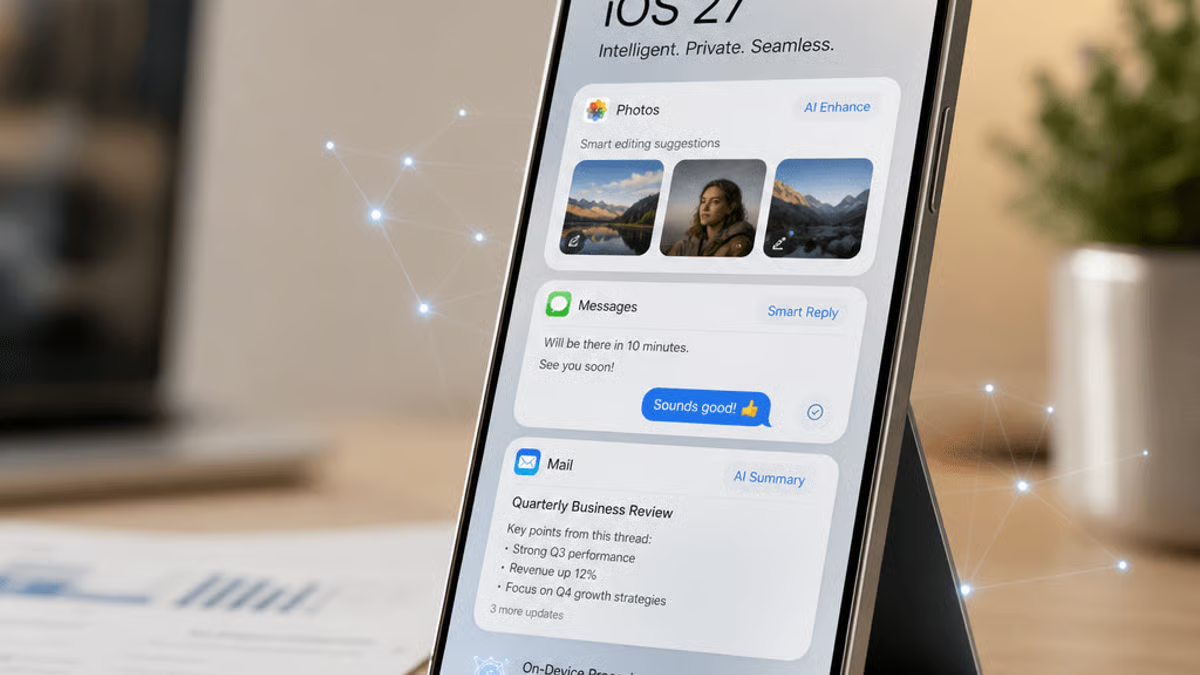
Apple just pulled a classic misdirection at WWDC 2026. While everyone fixated on Siri’s flashy AI makeover, the company quietly embedded its most transformative intelligence features across iOS 27 itself. According to TechCrunch’s Sarah Perez, the headline-grabbing voice assistant upgrades are just the opening act – the real story is how Apple Intelligence now powers everything from Photos to Messages in ways that’ll actually change how you use your iPhone daily.
Apple knows how to work a crowd. At WWDC 2026, the company spent considerable stage time showcasing Siri’s dramatic AI transformation – improved contextual understanding, multi-turn conversations, the works. But according to Sarah Perez at TechCrunch, the most useful AI features in iOS 27 are arriving somewhere else entirely.
Apple Intelligence, the company’s on-device AI framework introduced at WWDC 2024, is now spreading its tentacles across the entire operating system. We’re talking AI-powered photo editing that understands what you’re trying to fix before you say it, message composition tools that actually sound like you, and Mail summaries that cut through inbox chaos without sending your data to the cloud.
This isn’t just feature creep – it’s a fundamental rethinking of where AI lives on your phone. Instead of funneling everything through Siri as a gatekeeper, Apple is embedding intelligence directly into the apps you already use. The Photos app can now understand complex editing requests in natural language. Need to remove that tourist from your vacation shot? Just describe what you want gone. The AI processes it locally, using the same Neural Engine architecture that powers Face ID.
The implications for Google and other AI-first competitors are significant. While companies like OpenAI race to make their assistants more capable, Apple’s betting that users don’t want to talk to AI – they want AI to disappear into their workflows. It’s a classic Apple move: let others chase the bleeding edge while you perfect the integration.
Messages in iOS 27 reportedly gets Smart Reply on steroids, with Apple Intelligence analyzing conversation context, your writing style, and even emoji usage patterns to generate responses that don’t scream “I let my phone answer for me.” According to sources familiar with the update, the system trains itself on your messaging history entirely on-device, never uploading your conversations to Apple’s servers.
Mail is getting what Apple calls “Intelligent Summaries” – AI-generated digests of long email threads that actually capture action items and decisions. Anyone who’s returned from vacation to 200+ emails knows this isn’t a nice-to-have, it’s a sanity-saver. The feature works across personal and work accounts, with the AI understanding context well enough to prioritize what actually needs your attention versus what can wait.
But here’s where it gets interesting for developers. Apple’s also opening up parts of Apple Intelligence through new APIs, letting third-party apps tap into the same on-device AI models powering these system features. That means your favorite note-taking app or task manager could soon offer Apple-grade AI capabilities without building their own models from scratch or sending data to external servers.
The privacy angle is quintessentially Apple. While Microsoft faces ongoing scrutiny over Copilot’s data handling and Google navigates the complexities of Gemini’s cloud infrastructure, Apple’s doubling down on edge computing. Everything happens on your iPhone, protected by the same security architecture that already encrypts your device.
The competitive landscape just shifted. Samsung has been aggressive with Galaxy AI features, but those lean heavily on cloud processing. Meta is pouring billions into AI infrastructure, but struggles to get its models onto devices at scale. Apple’s advantage isn’t just the silicon – it’s controlling the entire stack from chip design to operating system to app ecosystem.
Industry observers note this also puts pressure on app developers who’ve built AI features using third-party services. If iOS 27 offers comparable capabilities natively with better privacy guarantees, users will migrate. That’s bad news for standalone AI apps that charge subscriptions for features Apple’s now giving away.
The developer implications extend beyond just features. Apple’s reportedly requiring apps that use external AI services to disclose data handling practices more prominently in iOS 27, with new privacy nutrition labels specifically for AI processing. It’s a not-so-subtle way of highlighting which apps send your data elsewhere versus keeping it local.
What we’re seeing is Apple’s long game crystallizing. While competitors chased ChatGPT-style assistants, Apple quietly built the infrastructure to put practical AI everywhere users actually need it. Siri’s improvements are real, but they’re also a distraction from the bigger shift happening across iOS.
The release timeline follows Apple’s typical pattern – iOS 27 launches in developer beta immediately, public beta next month, and general availability alongside new iPhones this fall. That gives the company months to refine these AI features based on real-world usage before the mainstream rollout.
Apple’s iOS 27 strategy reveals something crucial about where AI is heading on mobile devices. The future isn’t about talking to your phone more – it’s about your phone understanding you better without being asked. By embedding intelligence across the entire system rather than channeling it through a single assistant, Apple’s betting on AI that works invisibly in the background. That’s a fundamentally different approach from the chatbot-centric vision dominating the industry, and it plays directly to Apple’s strengths in hardware-software integration and privacy-focused design. For users, it means AI features that feel like natural extensions of iOS rather than bolted-on experiments. For competitors, it means playing catch-up on an entirely different playing field – one where Apple controls the chips, the OS, and increasingly, the AI models that power both.








Leave a Reply