
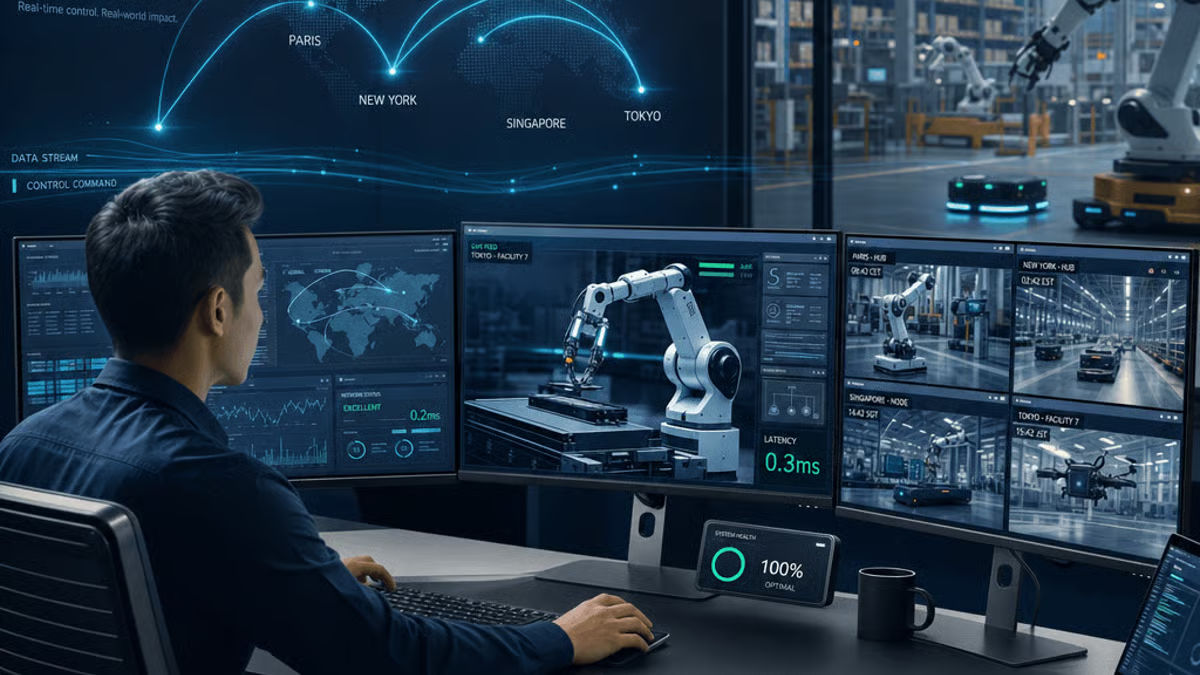
The developer who made billions of video streams work seamlessly is now tackling an even harder problem: making robots respond in real time. Jean-Baptiste Kempf, the French entrepreneur behind the ubiquitous VLC media player, has emerged from stealth with Kyber, an infrastructure layer designed to control remote devices with zero latency. It’s a pivot from pixels to physical AI, and it could define how the next generation of robots, drones, and IoT devices actually work in the real world.
If you’ve ever streamed a video without paying for it, you’ve probably used Jean-Baptiste Kempf’s work. The French developer’s VLC media player has been downloaded over 3 billion times, becoming the Swiss Army knife of video playback through relentless optimization and open-source evangelism. Now Kempf is applying that same infrastructure obsession to a very different challenge: making robots move without lag.
Kyber, his latest venture, is building what Kempf describes as an infrastructure layer to control remote devices in real time. Think of it as the nervous system for physical AI – the unglamorous but critical plumbing that lets a human operator in Paris control a warehouse robot in Tokyo, or enables a fleet of delivery drones to navigate city streets without crashing into each other. According to TechCrunch, Kempf has been quietly building Kyber while the AI world obsessed over large language models and chatbots.
The timing isn’t accidental. While everyone’s been focused on making AI smarter, a quieter revolution has been brewing in physical AI – robots that actually do things in the real world. But there’s a massive infrastructure gap. Current systems for remote device control struggle with latency, security, and scalability. A robot that takes half a second to respond to a command isn’t just slow, it’s dangerous. Kempf saw the same kind of problem he solved with VLC: millions of users trying to do something simultaneously, all demanding it work perfectly, right now.
What made VLC dominant wasn’t flashy features but ruthless efficiency. The player handles dozens of video formats, streams across terrible networks, and runs on everything from Windows XP machines to modern Macs. Kempf’s bet with Kyber is that the robotics industry needs that same kind of bulletproof infrastructure before physical AI can actually scale. You can’t deploy thousands of autonomous devices if your control layer falls apart under load.
The technical challenge is brutal. Real-time control means sub-100 millisecond latency, even across continents. It requires handling massive streams of sensor data, video feeds, and control commands simultaneously. Security can’t be an afterthought when you’re controlling physical devices that could cause real-world harm. And it all needs to work with the fragmented mess of robotics hardware and software stacks that currently exist.
Kempf’s open-source credibility gives Kyber an unusual edge. Robotics companies are notoriously protective of their tech stacks, but they’re also desperate for standardization. An infrastructure layer backed by someone with Kempf’s track record could become the de facto standard the same way VLC became the default video player – not through aggressive marketing, but by simply working better than everything else.
The market opportunity is staggering. Goldman Sachs estimates the physical AI and robotics market could reach $200 billion by 2030. But right now, every robotics company is rebuilding the same infrastructure from scratch. That’s where Kyber slots in – as the invisible layer that lets robotics companies focus on what makes their robots unique instead of reinventing remote control protocols.
Competitors exist, but they’re mostly focused on specific verticals or hardware platforms. What Kempf appears to be building is more fundamental: a protocol and infrastructure layer that works across different types of devices and use cases. It’s the same strategy that made VLC valuable – be the universal solution that just works, rather than the specialized tool that works perfectly for one narrow application.
The shift from open-source to commercial infrastructure isn’t new for Kempf. He’s been running VideoLAN, the organization behind VLC, as a sustainable project for years while exploring commercial opportunities. Kyber represents his biggest bet yet that the lessons from streaming video – handle massive scale, minimize latency, stay hardware-agnostic – apply directly to the physical world.
What remains unclear is Kyber’s business model and funding status. The TechCrunch report doesn’t mention investors or revenue strategy. That’s either extremely early stage or extremely stealthy. Given Kempf’s reputation, he could likely raise significant capital if he wanted to. The question is whether he’ll build Kyber with VC backing or bootstrap it the way he did VLC.
Kempf’s move from video streaming to robotics infrastructure isn’t as random as it seems. Both problems boil down to moving massive amounts of data reliably, at scale, in real time. If Kyber can do for robot control what VLC did for video playback – make it work everywhere, for everyone, without thinking about it – the company could become essential infrastructure for the physical AI era. The real test will be whether robotics companies, notorious for building everything in-house, will trust a third-party layer for something as mission-critical as device control. But if anyone can pull off that kind of adoption through sheer technical excellence, it’s the person who convinced 3 billion people to trust his video player.






Leave a Reply