
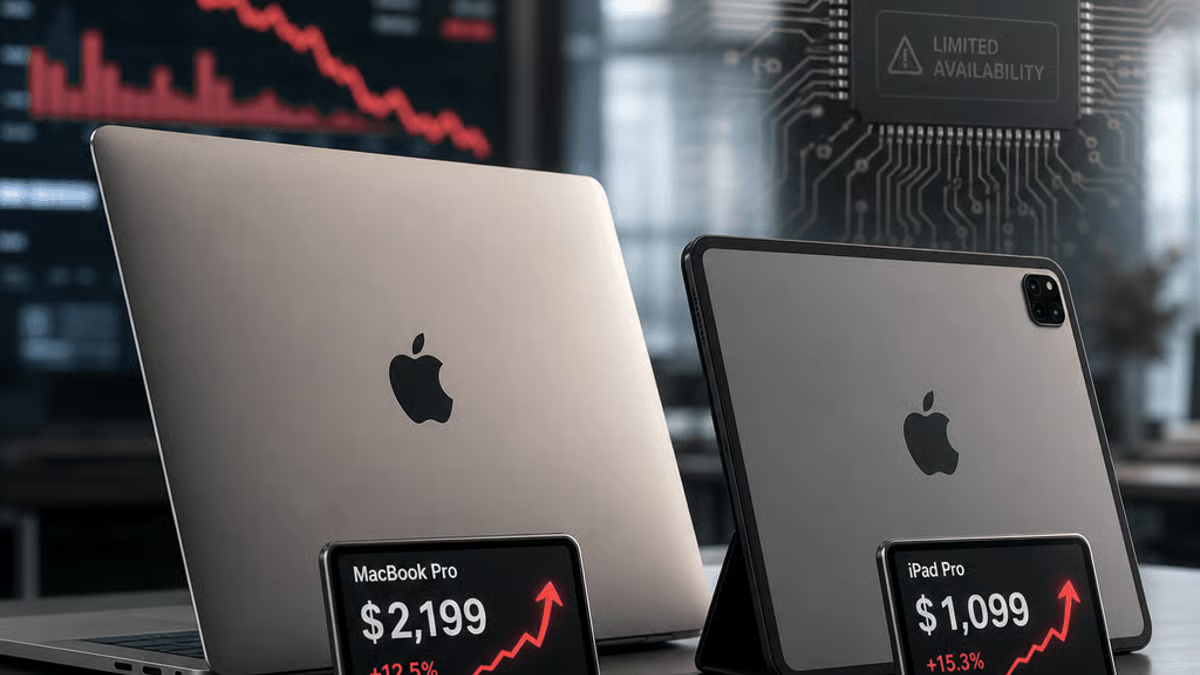
Apple just posted its worst trading day in over a year, with shares tumbling after the company rolled out steep price increases for MacBooks and iPads. The selloff came days after CEO Tim Cook warned that surging memory and storage costs would force the iPhone maker to pass expenses onto consumers. Wall Street’s reaction signals growing concern that Apple’s pricing power may finally be hitting its limit as AI-driven demand strains global chip supplies.
Apple shares took their biggest hit since early 2025 today, plunging as investors digested the reality of higher prices for two of the company’s most popular product lines. The selloff marks a sharp reversal for a stock that’s been relatively insulated from broader market volatility.
The trouble started last week when CEO Tim Cook told investors during a surprise announcement that Apple would increase prices on MacBooks and iPads due to what he called “unprecedented” cost pressures in the memory and storage supply chain. According to CNBC’s reporting, the price adjustments hit just as summer buying season kicks into gear.
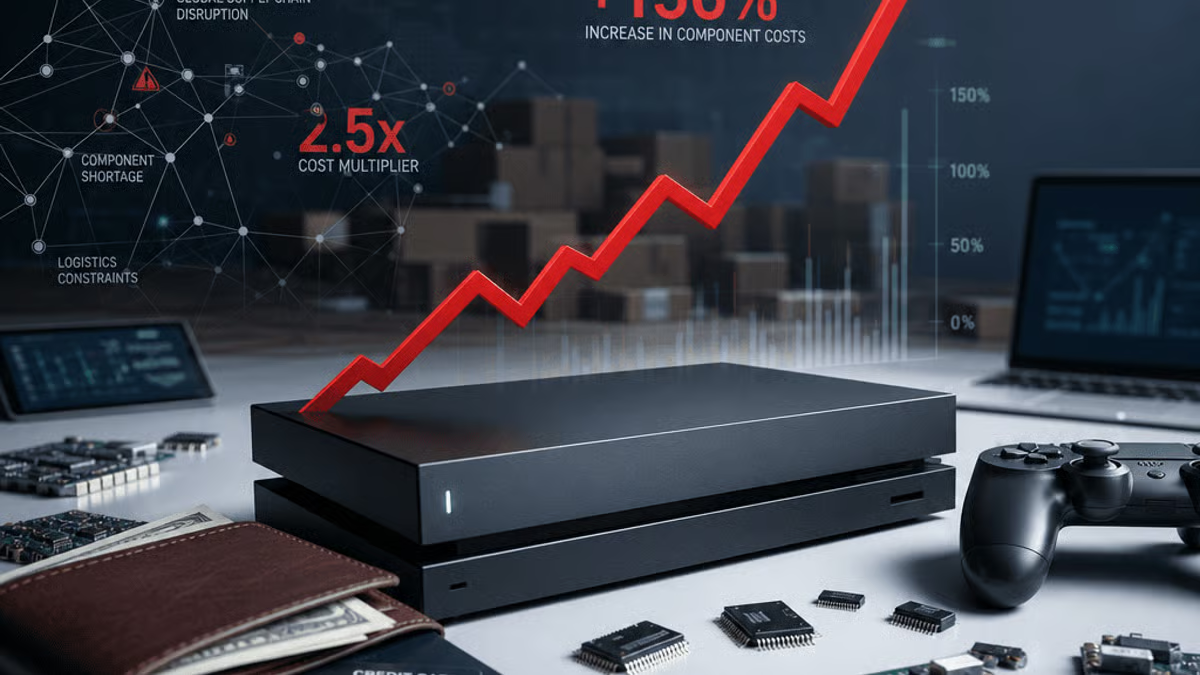
But the real story here isn’t just about Apple passing along costs. It’s about what’s driving those costs in the first place. The global memory market is experiencing its tightest supply conditions in years, and AI is the culprit. Companies racing to build AI infrastructure are gobbling up high-bandwidth memory (HBM) and advanced storage solutions, creating a ripple effect across the entire semiconductor ecosystem. When Nvidia and hyperscalers are willing to pay premium prices for cutting-edge memory chips, consumer electronics makers like Apple get squeezed.
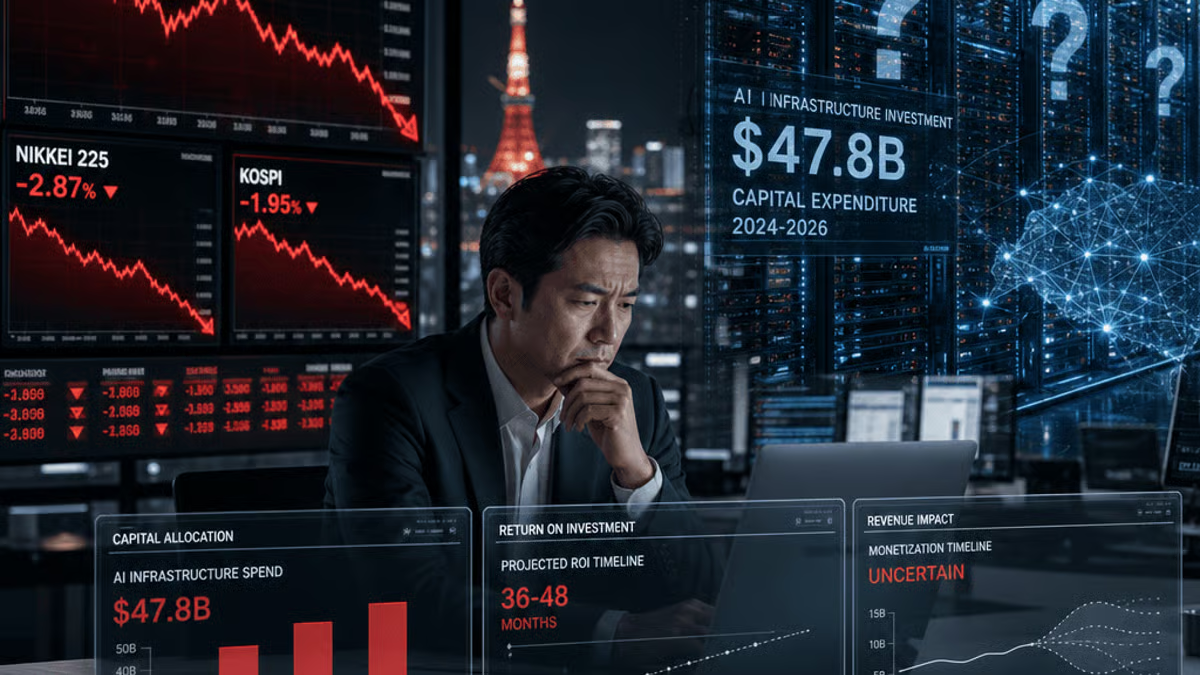
The timing couldn’t be worse for Cupertino. Apple’s been pushing hard into AI with its Apple Intelligence features, which ironically require more powerful chips with more memory. The company finds itself competing for the same constrained supply that’s driving up its costs. It’s a vicious cycle that’s now hitting consumer wallets directly.
Investors are clearly spooked. Apple’s built its empire on premium pricing, but there’s always been an implicit understanding that the company wouldn’t push too far too fast. Today’s market reaction suggests some worry that line may have been crossed. With inflation still a concern for consumers and competition from Samsung and others heating up, raising prices is a risky move.
The memory shortage isn’t going away anytime soon either. Industry analysts have been warning for months that the AI boom would create supply bottlenecks, but the speed and scale caught many off guard. New memory fabrication plants take years to build, meaning relief won’t come quickly. Apple’s not alone in facing these pressures – Microsoft, Google, and other hardware makers are all navigating the same tight market.
What makes this particularly interesting is how it exposes the tension between Apple’s consumer business and its AI ambitions. The company needs cutting-edge components to stay competitive in AI, but that very competition is making its traditional products more expensive. It’s a strategic dilemma that doesn’t have an easy answer.
Wall Street’s clearly trying to figure out what this means for demand. Apple’s historically been able to maintain sales even with premium pricing, but these aren’t normal times. Consumer sentiment has been shaky, and discretionary spending on big-ticket items like laptops and tablets could suffer if prices climb too high. The question now is whether Apple’s brand loyalty can withstand the sticker shock.
The broader tech industry is watching closely too. If Apple – with arguably the strongest consumer brand in tech – struggles to pass along cost increases, what does that mean for everyone else? Smaller players without Apple’s pricing power could face even tougher choices between margin compression and market share loss.
Cook’s been navigating Apple through supply chain challenges for years, dating back to his role as operations chief. But this memory crunch presents a different kind of problem. It’s not a temporary COVID-related disruption or a isolated component shortage. It’s a fundamental shift in how scarce computing resources get allocated in an AI-first world.
Today’s stock plunge marks a potential turning point for Apple’s pricing strategy. The company’s betting that its brand loyalty can weather higher prices driven by AI-fueled memory shortages, but Wall Street’s skeptical. With supply constraints expected to persist well into next year, Apple faces a delicate balancing act between maintaining margins and keeping consumers from defecting to cheaper alternatives. How Cook navigates this challenge could define Apple’s market position in the AI era – and whether the company can maintain its premium pricing power when the underlying tech landscape is fundamentally shifting.







Leave a Reply