
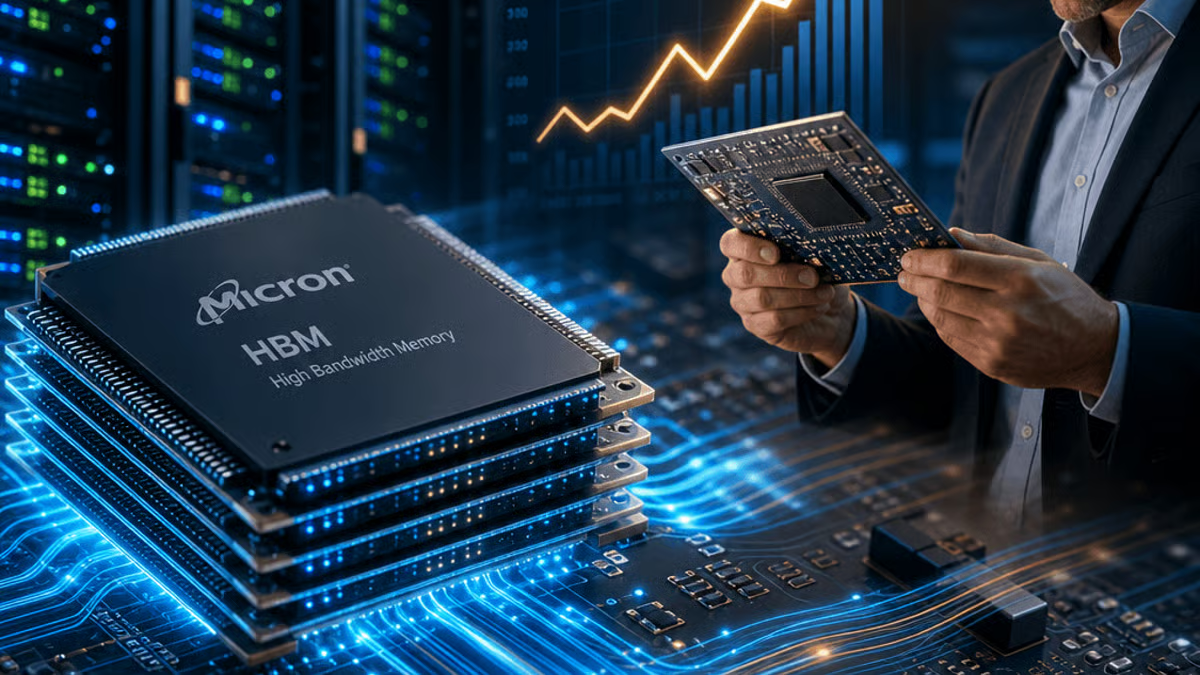
Micron Technology just posted a monster earnings beat that sent its stock jumping 10% in after-hours trading, capping off a staggering 700% surge over the past year. The memory chip maker’s revenue quadrupled compared to the same quarter last year, driven by what analysts are calling an unprecedented supply crunch in high-bandwidth memory crucial for AI data centers. The results underscore how the AI infrastructure buildout is creating windfall profits for companies that can deliver the specialized chips powering systems from Nvidia and others.
Micron Technology is riding the AI wave to record heights. The Boise-based memory chip giant reported Q3 2026 results that blew past Wall Street expectations, with revenue quadrupling from the same period last year as prices for specialized AI memory chips continue their meteoric rise. The stock popped 10% in after-hours trading Wednesday, adding to what’s already been a 700% climb over the past 12 months.
The earnings beat tells the story of an industry transformed by artificial intelligence. Memory chips, once a commodity business prone to brutal boom-bust cycles, have become the critical bottleneck in the race to build out AI infrastructure. High-bandwidth memory, or HBM, which is stacked directly onto AI accelerators to feed data-hungry models, remains in severe short supply even as manufacturers race to add capacity.
According to CNBC’s report, the pricing environment has completely flipped from the oversupply conditions that plagued the industry just two years ago. Where memory makers were once cutting prices to move inventory, they’re now allocating scarce supply to the highest bidders. That shift is flowing straight to the bottom line.
The memory crunch is rippling across the entire AI supply chain. Nvidia, which dominates the AI chip market with over 80% share, has been scrambling to secure enough HBM to meet demand for its latest Blackwell architecture. Cloud giants including Amazon Web Services, Microsoft Azure, and Google Cloud are all competing for the same limited pool of advanced memory chips to power their AI offerings.
Micron isn’t alone in benefiting from these dynamics. South Korean rivals Samsung and SK Hynix have also seen their memory divisions swing from losses to record profits. But Micron’s 700% stock surge over the past year suggests investors believe the American chipmaker is particularly well-positioned to capitalize on the AI buildout, especially as Washington pushes to reshore semiconductor manufacturing.
The company has been investing heavily in expanding its HBM production capacity, but new fabs take years to come online. Industry analysts expect the supply-demand imbalance to persist well into 2027, which means the pricing tailwinds that drove this quarter’s revenue quadruple aren’t going away anytime soon. Memory typically accounts for 30-40% of the total cost of an AI accelerator system, making it one of the most valuable components in the entire stack.
What makes this cycle different from past memory booms is the sustained nature of AI infrastructure spending. Unlike cryptocurrency mining or smartphone upgrade cycles that can turn on a dime, hyperscalers are making multi-year commitments to build out AI capacity. Microsoft alone has pledged to spend over $50 billion on AI infrastructure in 2026, much of it on data centers packed with memory-intensive accelerators.
The earnings report also highlights how the memory industry has consolidated and matured. Just three companies—Micron, Samsung, and SK Hynix—control over 95% of the DRAM market and nearly all HBM production. That oligopoly structure means pricing discipline is likely to hold even as new capacity gradually comes online, a stark contrast to the oversupply spirals that used to plague the sector.
For Nvidia and other AI chip designers, Micron’s results are a double-edged sword. Soaring memory costs eat into their customers’ budgets and could potentially slow adoption at the margin. But the pricing power also validates the incredible demand for AI infrastructure and suggests the boom has legs. If memory makers are quadrupling revenue and still can’t keep up with orders, the underlying AI buildout must be even more massive than headline numbers suggest.
The 10% after-hours pop on top of a 700% annual gain raises questions about valuation, but momentum traders don’t seem to care. As long as the AI infrastructure spending spree continues and memory remains the critical constraint, investors are betting Micron can keep posting blowout results. The company’s next challenge will be demonstrating it can translate this windfall into sustainable long-term growth as new capacity eventually hits the market.
Micron’s blowout earnings and 700% stock surge crystallize how the AI infrastructure boom is minting winners in unexpected places. Memory chips, long viewed as a commoditized business, have become the critical bottleneck that’s generating windfall profits and reshaping industry dynamics. With hyperscalers committing tens of billions to AI buildouts and supply constraints expected to persist into 2027, the memory crunch looks likely to continue delivering outsized gains for the handful of companies that can produce the specialized chips powering the AI revolution. For investors and industry watchers, Micron’s results offer a clear signal: the AI infrastructure spending spree isn’t slowing down—it’s accelerating.








Leave a Reply