
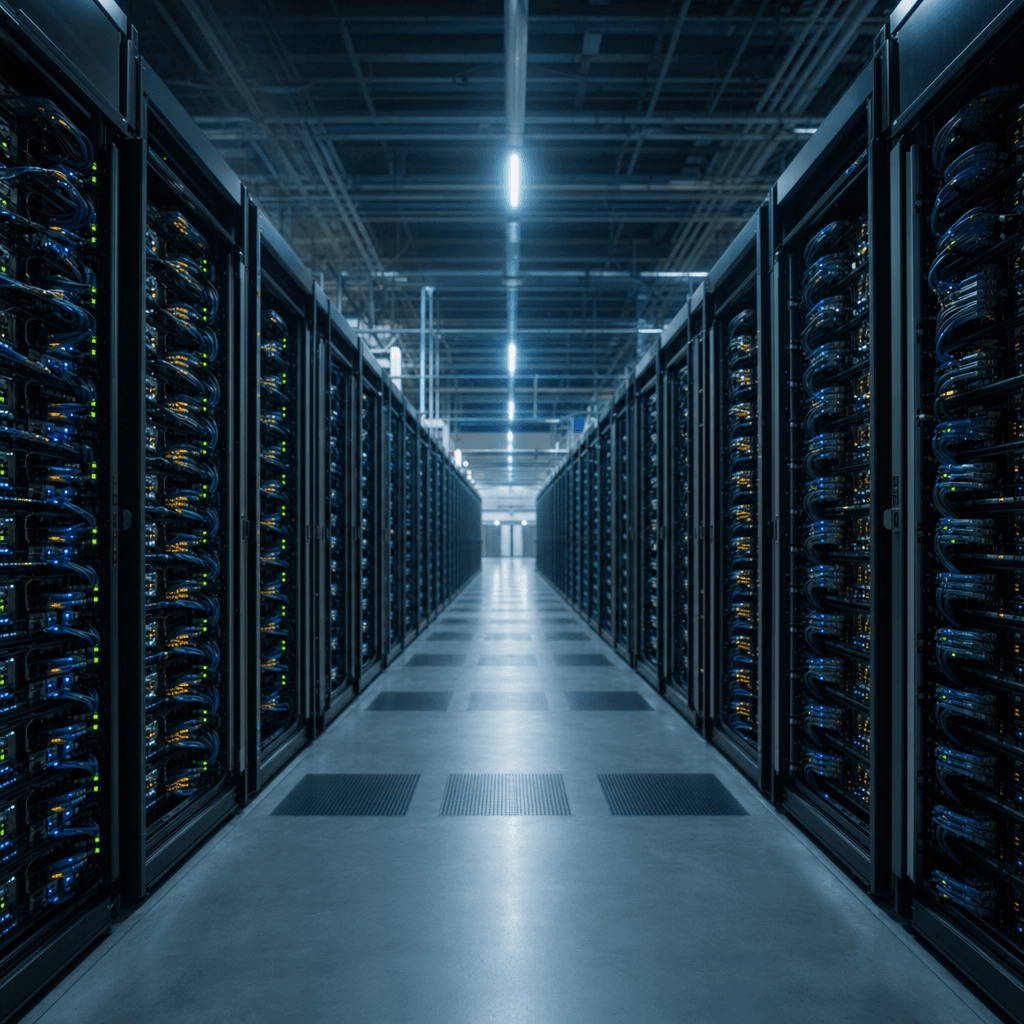
Alphabet just dropped a bombshell that’s reshaping the entire tech infrastructure landscape. The Google parent company announced it’s raising its 2026 capital expenditure guidance to as much as $190 billion – and plans to spend even more in 2027. The move, revealed alongside first-quarter earnings that showed surging cloud revenue, represents the biggest infrastructure bet in tech history and signals that the AI arms race is entering a new, more expensive phase.
Alphabet is going all-in on AI infrastructure, and the numbers are staggering. The company’s announcement that it’s upping its 2026 capital expenditure to as much as $190 billion represents a seismic shift in how Big Tech is allocating resources. But here’s the kicker – the company made clear during its Q1 2026 earnings call that 2027 will see spending climb even higher.
The timing isn’t coincidental. Google Cloud posted booming revenue in the first quarter, according to earnings released Tuesday, validating the company’s massive investments in AI infrastructure. Enterprise customers are flocking to cloud platforms that can handle increasingly complex AI workloads, and Google is betting billions that it can capture that demand.
This capex figure dwarfs anything we’ve seen before in the tech sector. To put it in perspective, Microsoft and Amazon have each been spending roughly $50-60 billion annually on infrastructure. Alphabet’s $190 billion commitment represents more than triple that baseline – a clear signal that the company sees AI infrastructure as the defining competitive battleground of the next decade.
The investment will flow primarily into data centers, custom AI chips, and networking infrastructure needed to train and deploy large language models at scale. Google has been developing its own Tensor Processing Units (TPUs) to reduce dependence on Nvidia GPUs, though the company still relies heavily on external chip suppliers for its AI operations.
What’s driving this spending spree? The enterprise AI market is exploding faster than anyone predicted. Companies across industries are racing to integrate AI capabilities, and they need massive computing infrastructure to do it. Google Cloud’s strong Q1 performance suggests customers are willing to pay premium prices for reliable AI infrastructure – making the upfront capital investment economically viable.
But there’s risk in this strategy too. The 2027 spending increase commitment means Alphabet is betting that AI demand will continue accelerating, not plateau. If enterprise adoption slows or competing technologies emerge, the company could find itself with expensive underutilized data centers.
The announcement sent ripples through the tech sector. Analysts are now watching whether Microsoft, Amazon Web Services, and other cloud providers will match Google’s spending levels. The infrastructure arms race could force smaller players out of the market entirely, consolidating AI capabilities among a handful of tech giants with deep enough pockets to compete.
Alphabet’s move also has implications for the broader economy. A $190 billion capex commitment means massive contracts for data center construction, networking equipment suppliers, and chip manufacturers. Nvidia stands to benefit enormously, though Google’s push toward custom TPUs could eat into those gains over time.
The company’s willingness to spend more in 2027 suggests management believes we’re still in the early innings of AI infrastructure buildout. While competitors have talked about eventually moderating capex, Alphabet is explicitly signaling the opposite – that peak spending is still ahead.
For enterprises evaluating cloud providers, this announcement offers both reassurance and concern. On one hand, Google’s massive investment signals long-term commitment to AI infrastructure. On the other, customers may worry about getting locked into a platform where the provider needs to recoup unprecedented capital investments through higher prices down the road.
Alphabet’s $190 billion infrastructure bet represents more than just a big number – it’s a fundamental statement about where the tech industry is headed. The company is wagering that whoever controls the AI infrastructure layer will dominate the next era of computing, and it’s willing to spend historic sums to secure that position. With 2027 spending set to climb even higher, the message to competitors is clear: the cost of staying in the AI race just went up dramatically. For enterprises, investors, and the broader tech ecosystem, this capex escalation will reshape everything from chip supply chains to power grid demands. The AI infrastructure war isn’t cooling down – it’s just getting started.










Leave a Reply