
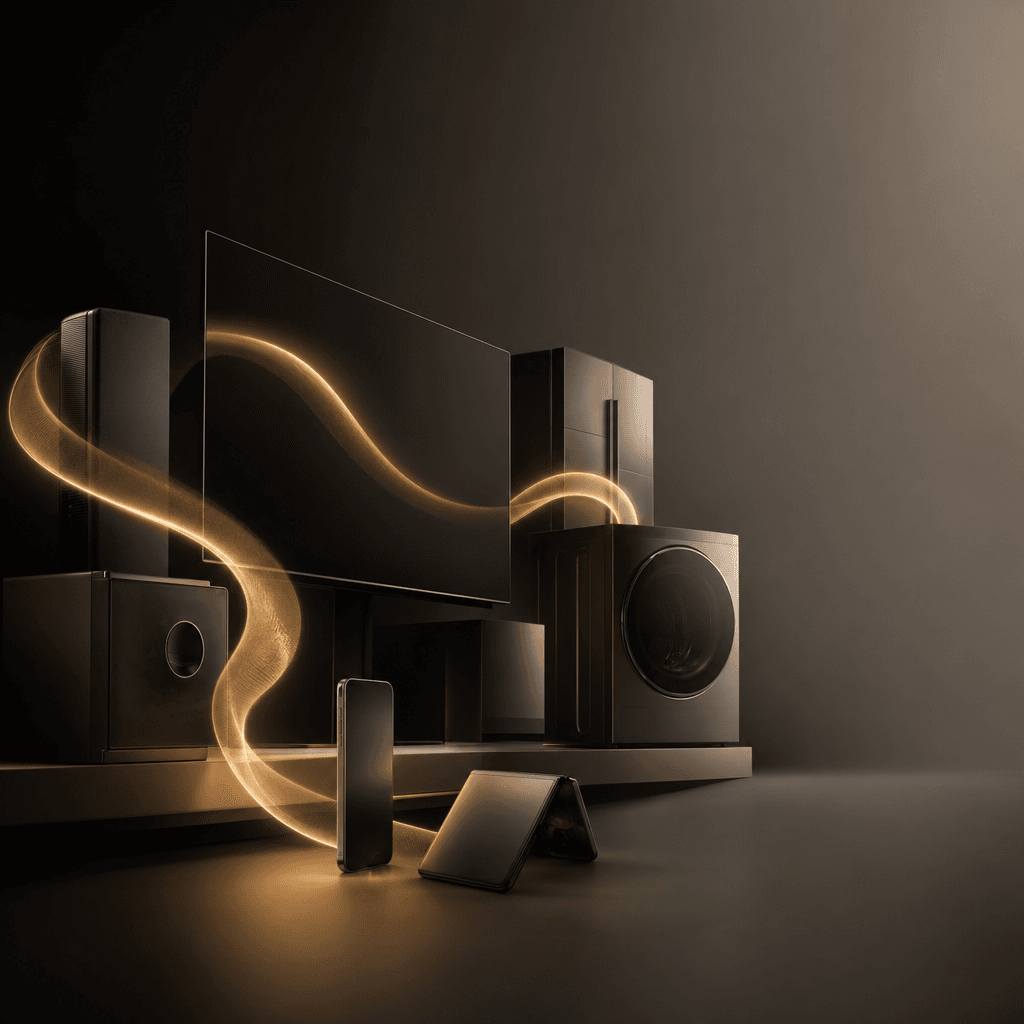
Samsung just made design award history. The company swept all 16 product categories it entered at the 2026 Red Dot Design Awards, landing two coveted Best of the Best honors for its OLED TV S95H and Bespoke AI Laundry series. The clean sweep marks a major validation of Samsung’s new “Expressive Design” strategy, which Chief Design Officer Mauro Porcini says puts human emotion and identity at the center of product development. For a company pushing hard into AI-powered home appliances and premium displays, the recognition couldn’t come at a better time.
Samsung Electronics achieved a rare design sweep at the Red Dot Design Award, one of the industry’s most prestigious honors dating back to 1955. The company secured Best of the Best recognition for its OLED TV S95H and Bespoke AI Laundry series while winning awards across all 16 product categories it entered.
The achievement validates Samsung’s pivot to what it calls “Expressive Design,” a philosophy that moves beyond pure functionality into emotional connection. “We design not only to function, but to create meaning and connection,” Mauro Porcini, President and Chief Design Officer of Samsung’s Device eXperience Division, told Samsung Global Newsroom. “Our ambition is to enrich people’s lives through experiences that are both purposeful and deeply human.”
The S95H showcases Samsung’s boldest TV design bet in years. Its FloatLayer design sandwiches an ultra-thin OLED panel above a luxurious metal plate, creating the optical illusion that the screen floats in front of a silver frame. The effect transforms the television from consumer electronics into wall art, a category Samsung has been chasing since The Frame launched years ago. But where The Frame mimicked picture frames, the S95H leans into premium minimalism with exposed metallic surfaces that Samsung says blend into high-end interior spaces.
The Bespoke AI Laundry line takes a different approach to design consistency. Samsung applied a mono-body design language across standalone washers, dryers and combination units, letting consumers mix and match appliances without clashing aesthetics. The 7-inch Smart Screen serves as the control hub, integrating with SmartThings to manage connected devices and deliver AI-powered lifestyle recommendations. It’s Samsung’s play for the connected home, where appliances double as smart home controllers.
The 16-product winning streak spans Samsung’s entire consumer portfolio. The Galaxy Z Fold7, which Samsung calls its thinnest and lightest foldable yet, picked up recognition alongside the Galaxy XR headset, Samsung’s entry into extended reality with multimodal AI at its core. The inclusion of both devices signals Samsung’s belief that AI-first hardware design resonates with award juries and, presumably, consumers.
Home appliances dominated the winner’s list. The Bespoke AI Refrigerator Family Hub earned recognition for its built-in LCD screen displaying recipes and weather. The Bespoke AI Jet Bot robot vacuum won for AI Object Recognition paired with an All-in-One Clean Station with steam cleaning. Even Samsung’s Portable SSD T7 Resurrected made the cut, featuring housing made entirely from recycled aluminum in a nod to sustainability-focused design.
Samsung’s audio and display innovations also scored. The Music Studio 5 wireless speaker visualizes soundwaves that shift in shape and intensity, while The Movingstyle portable touchscreen packs Dolby Atmos, HDR10+, a battery and rolling stand into a mobile display. The Spatial Signage, a glasses-free 3D commercial display, points to Samsung’s enterprise ambitions beyond consumer products.
The Red Dot sweep comes as Samsung faces intensifying competition in premium home appliances and displays. LG continues pushing OLED innovation while Chinese manufacturers like Hisense undercut on price. Design differentiation becomes critical when display technology commoditizes. Samsung’s betting that “Expressive Design” creates enough emotional pull to justify premium pricing.
What’s notable is the AI integration across nearly every winning product. The Bespoke AI WindFree Pro Air Conditioner uses a three-blade system for tailored wind modes. The Bespoke AI WindFree Combo Gallery Pro analyzes room conditions and usage patterns with AI for optimal cooling. Even the laundry appliances lean heavily on AI-powered personalization. Samsung’s design strategy and AI strategy appear to be converging into a single product philosophy.
The German organization Design Zentrum Nordrhein Westfalen, which runs the Red Dot Awards, evaluates products across Product Design, Design Concept and Brands & Communication Design categories. Samsung’s entries fell under Product Design, where functional innovation meets aesthetic execution. The Best of the Best distinction goes to products that set new design benchmarks in their categories.
For Samsung, the timing aligns with broader market positioning. The company’s been pushing “Bespoke” branding across home appliances for several years, emphasizing customization and premium finishes. The Red Dot recognition gives third-party validation to that strategy just as Samsung expands its AI-powered appliance ecosystem. Whether design awards translate to market share remains the bigger question, but Samsung’s clearly betting that human-centered design paired with AI functionality creates a defensible moat in consumer electronics.
Samsung’s Red Dot sweep isn’t just about trophy collecting. It’s a signal that the company’s design-first, AI-integrated product strategy resonates beyond marketing departments and into the evaluation criteria of one of the industry’s most respected design institutions. The real test comes in retail, where consumers decide if floating OLED screens and AI-powered laundry appliances justify premium price tags. But for now, Samsung’s got the design credentials to back up its “Expressive Design” pivot, and a product lineup that positions AI as the invisible thread connecting everything from refrigerators to foldable phones.










Leave a Reply