
- ■
- ■
Memory chip prices continue climbing as HBM shortage intensifies across AI infrastructure buildouts
- ■
Results validate Nvidia’s supply chain strength and sustainability of AI hardware spending boom
- ■
Watch for competitor responses from Samsung and Micron as memory pricing power shifts to suppliers
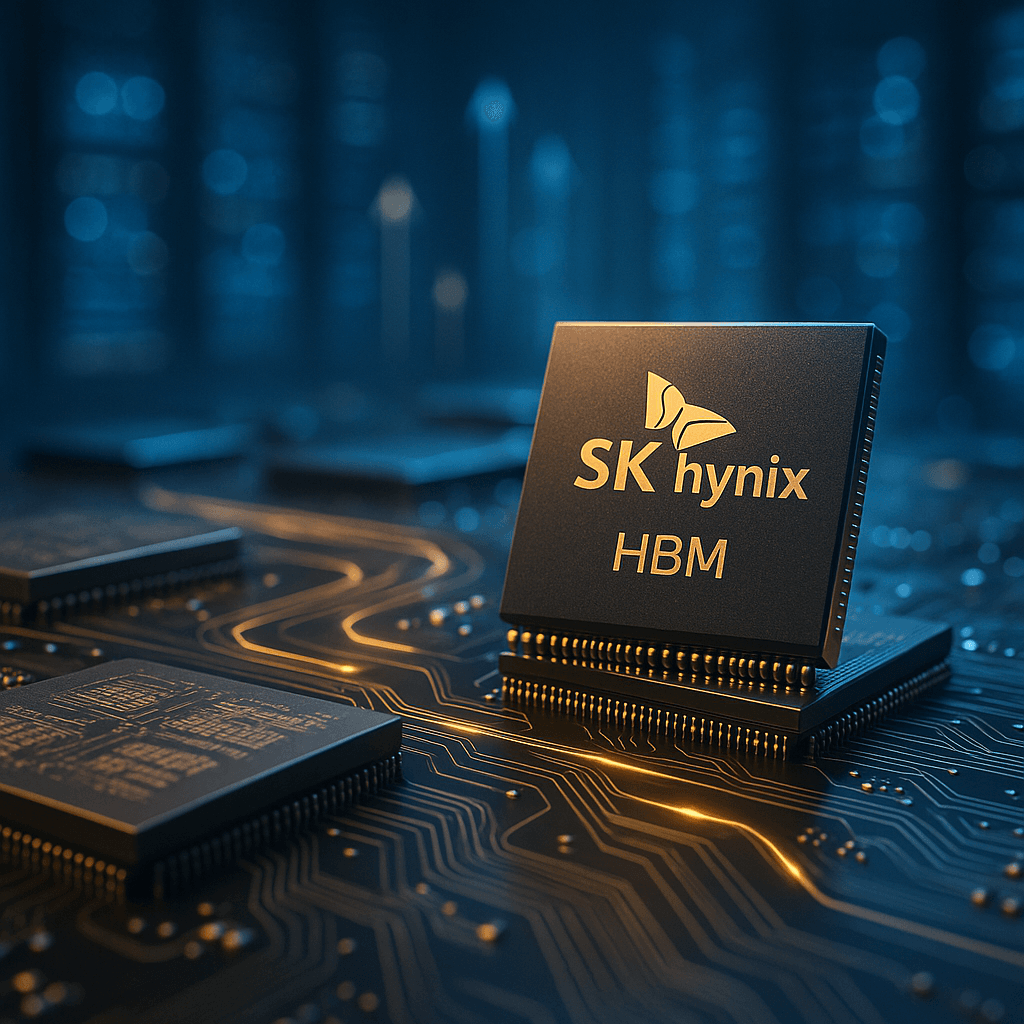
SK Hynix just posted another blowout quarter, cementing the South Korean chipmaker’s position as the biggest winner in the AI infrastructure gold rush. The world’s second-largest memory chip manufacturer reported record-breaking first-quarter profit and revenue, meeting analyst expectations as prices for high-bandwidth memory (HBM) chips continue their meteoric climb. The results underscore a fundamental shift in the semiconductor industry: AI isn’t just driving demand—it’s creating scarcity that’s reshaping pricing power across the entire supply chain.
SK Hynix isn’t just riding the AI wave—it’s becoming the tide itself. The company’s latest quarterly results reveal how deeply the AI boom has restructured the semiconductor industry’s economics, with memory chips transforming from a commoditized afterthought into the most coveted—and expensive—component in data center infrastructure.
The earnings report comes as Nvidia and other AI chipmakers scramble to secure enough HBM chips to meet insatiable demand for GPU clusters. High-bandwidth memory has become the bottleneck in AI infrastructure, creating a seller’s market that SK Hynix has exploited with surgical precision. According to industry analysts at TrendForce, HBM prices have surged over 40% year-over-year as supply constraints tighten.
What makes this quarter particularly significant is the sustainability it suggests. This isn’t a one-time spike—SK Hynix has now posted consecutive record quarters as AI infrastructure spending shows no signs of slowing. The company’s HBM3E chips, which power the latest generation of AI accelerators, remain sold out through at least Q3 2026, according to supply chain checks.
The ripple effects extend far beyond SK Hynix’s balance sheet. Samsung, the world’s largest memory chipmaker, has been racing to catch up in HBM production after initially underestimating the market. The competitive dynamics have flipped: where memory manufacturers once competed fiercely on price, they now compete on allocation—deciding which customers get chips at all.
Nvidia remains SK Hynix’s largest customer, absorbing the majority of its HBM production for use in H100 and upcoming Blackwell AI chips. The symbiotic relationship has become crucial for both companies: Nvidia needs SK Hynix’s cutting-edge memory to maintain its AI chip dominance, while SK Hynix needs Nvidia’s voracious appetite to justify massive capital investments in next-generation fabrication facilities.
But the memory boom extends beyond just HBM. Standard DRAM and NAND flash prices have also firmed as data center operators stockpile chips amid fears of prolonged shortages. Enterprise customers are reportedly signing long-term supply agreements at premium prices—a stark reversal from the oversupply conditions that plagued the industry just two years ago.
The geopolitical dimension adds another layer of complexity. With memory chip manufacturing concentrated in South Korea and Taiwan, supply chain security has become a national priority for the U.S. and China. SK Hynix’s dominance in HBM gives South Korea outsized influence over the pace of AI development globally—a strategic asset that hasn’t gone unnoticed in Seoul or Washington.
Looking at the competitive landscape, Micron Technology represents the primary Western alternative, but the U.S. chipmaker remains months behind in HBM technology. Samsung’s aggressive capacity expansion could eventually pressure pricing, but for now SK Hynix enjoys a technical lead and first-mover advantage that translates directly to pricing power.
The capital expenditure implications are staggering. SK Hynix has committed over $20 billion to expanding HBM production capacity, betting that AI infrastructure spending will remain elevated through the end of the decade. It’s a massive wager—but one that looks increasingly prescient as hyperscalers like Microsoft, Amazon, and Google continue pouring hundreds of billions into AI data centers.
What analysts are watching closely is whether this pricing environment can sustain itself once Samsung’s new HBM fabs come online in late 2026. Historical precedent suggests memory markets inevitably oversupply and crash, but the AI infrastructure buildout may be different—both in scale and duration. The question isn’t whether demand exists, but whether supply can expand fast enough to meet it without triggering the boom-bust cycles that have defined semiconductor economics for decades.
For now, SK Hynix sits at the nexus of the AI revolution’s most critical chokepoint. Every ChatGPT query, every AI model training run, every autonomous vehicle—all depend on memory chips that remain in desperately short supply. The company’s record earnings aren’t just a financial milestone; they’re a signal that the AI infrastructure layer remains far from saturated, with years of growth still ahead.
SK Hynix’s record quarter crystallizes a fundamental truth about the AI boom: it’s not just about the chips that do the thinking, but the memory that feeds them. As long as HBM remains the scarcest resource in AI infrastructure, SK Hynix will continue printing money while shaping the pace of AI development globally. The real test comes when Samsung’s capacity hits the market later this year—but even a supply increase may simply satisfy pent-up demand rather than crash prices. For investors, suppliers, and anyone building AI infrastructure, SK Hynix’s earnings offer the clearest signal yet that the hardware layer of the AI revolution remains in the early innings, not the final stretch.









Leave a Reply