
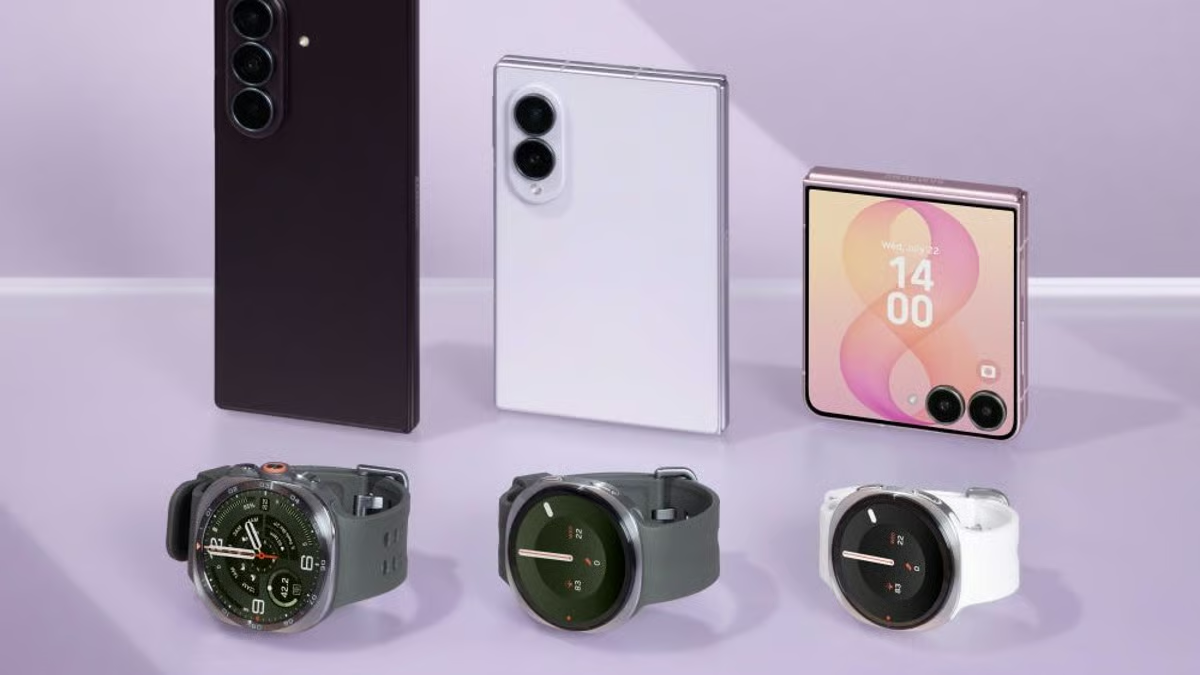
[Samsung](https://www.samsung.com) just dropped invites for Galaxy Unpacked on February 25 in San Francisco, teasing what it calls “the next AI phone” built around personal, adaptive intelligence. The event marks the company’s latest push to make Galaxy AI feel less like a feature and more like a native part of how its flagship phones work. With the tagline promising to “make your life easier,” Samsung’s betting that friction-free AI integration will be the key differentiator in a crowded premium smartphone market where everyone’s racing to define what AI-native really means.
[Samsung](https://www.samsung.com) is making its move. The company just sent out invites for Galaxy Unpacked on February 25, and the messaging is clear – this isn’t about incremental camera upgrades or slightly faster chips. Samsung’s framing the next Galaxy S series as “the next AI phone,” a device where intelligence adapts to you rather than the other way around.
The invitation language is deliberately specific. Samsung talks about removing friction, simplifying everyday interactions, and making Galaxy AI feel “seamlessly integrated from the moment it’s in hand.” That’s a departure from last year’s approach, where AI features felt bolted on – impressive demos that didn’t always translate to daily utility. According to the [official announcement](https://news.samsung.com/global/invitation-galaxy-unpacked-february-2026-the-next-ai-phone-makes-your-life-easier), this marks “a new phase in the era of AI as intelligence becomes truly personal and adaptive.”
The San Francisco venue choice is strategic. Samsung’s hosting in Apple’s backyard, right as the iPhone maker typically preps its spring refresh cycle. The timing suggests Samsung wants to define what AI-first smartphones mean before Apple sets the narrative. Industry watchers have noted that both companies are racing to prove their AI implementations aren’t just repackaged chatbots, but fundamentally different ways to interact with mobile devices.
What Samsung’s actually unveiling remains tightly wrapped, but the emphasis on “personal and adaptive” intelligence hints at on-device models that learn user patterns without cloud round-trips. That would address two pain points – privacy concerns and the lag time that makes current AI assistants feel sluggish. The company’s been investing heavily in neural processing units and has partnerships with Qualcomm on dedicated AI silicon, which could finally pay off if the integration lives up to the hype.
The event streams live at 10 a.m. Pacific on [Samsung.com](https://www.samsung.com/unpacked), the company’s YouTube channel, and Samsung Newsroom. That’s 1 p.m. Eastern, 6 p.m. London, 7 p.m. Central European Time – a global rollout that suggests Samsung sees this as a flagship moment, not a regional play.
Galaxy AI launched last year as Samsung’s answer to the generative AI boom, bundling features like real-time translation, photo editing tools, and text summarization into the Galaxy S24 series. The reception was mixed. Tech reviewers praised the ambition but noted the features felt scattered – impressive in isolation but lacking a cohesive vision. If Samsung’s learned anything, it’s that consumers don’t want an AI phone with 47 features. They want a phone that’s genuinely smarter about the three things they do most.
The “remove friction” messaging suggests Samsung’s focusing on predictive intelligence – surfaces the right app before you search for it, drafts responses that actually sound like you, manages notifications based on what you actually care about. That’s harder than it sounds. Getting AI personalization right means walking the privacy tightrope, where helpfulness crosses into creepy if the algorithm knows too much.
Samsung’s pushing pre-registration hard, offering “exclusive benefits” for those who sign up at samsung.com/unpacked ahead of the event. That playbook worked for the Galaxy Z Fold launches, building anticipation and capturing early adopters who’d otherwise wait for reviews. The company needs that momentum. Premium smartphone sales have been sluggish globally, and convincing people to upgrade requires a compelling story beyond marginal spec bumps.
What’s really at stake here is the platform war’s next chapter. If Samsung can demonstrate AI that genuinely adapts to individuals – not just generic suggestions everyone gets – it positions Galaxy as the thinking person’s smartphone against Apple’s walled garden approach. But if it’s another wave of flashy demos that don’t survive real-world use, the AI phone narrative loses credibility fast.
The invitation’s promotional video teases interfaces and interactions but reveals nothing concrete. That’s standard for Samsung’s Unpacked events, where secrecy builds hype but also raises expectations dangerously high. The company’s promised adaptive AI before, and delivered features that adapted mostly to Samsung’s vision of how you should use your phone.
February 25 will show whether Samsung’s cracked the code on making AI feel native rather than novelty. The industry’s watching because whoever defines what AI-native smartphones actually mean will shape the next upgrade cycle – and the one after that.
Samsung’s February 25 reveal will test whether the company can move AI from marketing bullet point to genuine utility. The “personal and adaptive” promise sounds ambitious, but the smartphone market’s seen plenty of ambitious promises that didn’t survive contact with actual usage patterns. If Samsung delivers on friction-free intelligence that adapts to individuals rather than forcing users into predetermined workflows, it could redefine what premium smartphones compete on. If it’s another round of flashy demos that don’t stick, the AI phone narrative loses steam right as the industry needs it most. Either way, Apple’s spring event just got more interesting.







Leave a Reply