
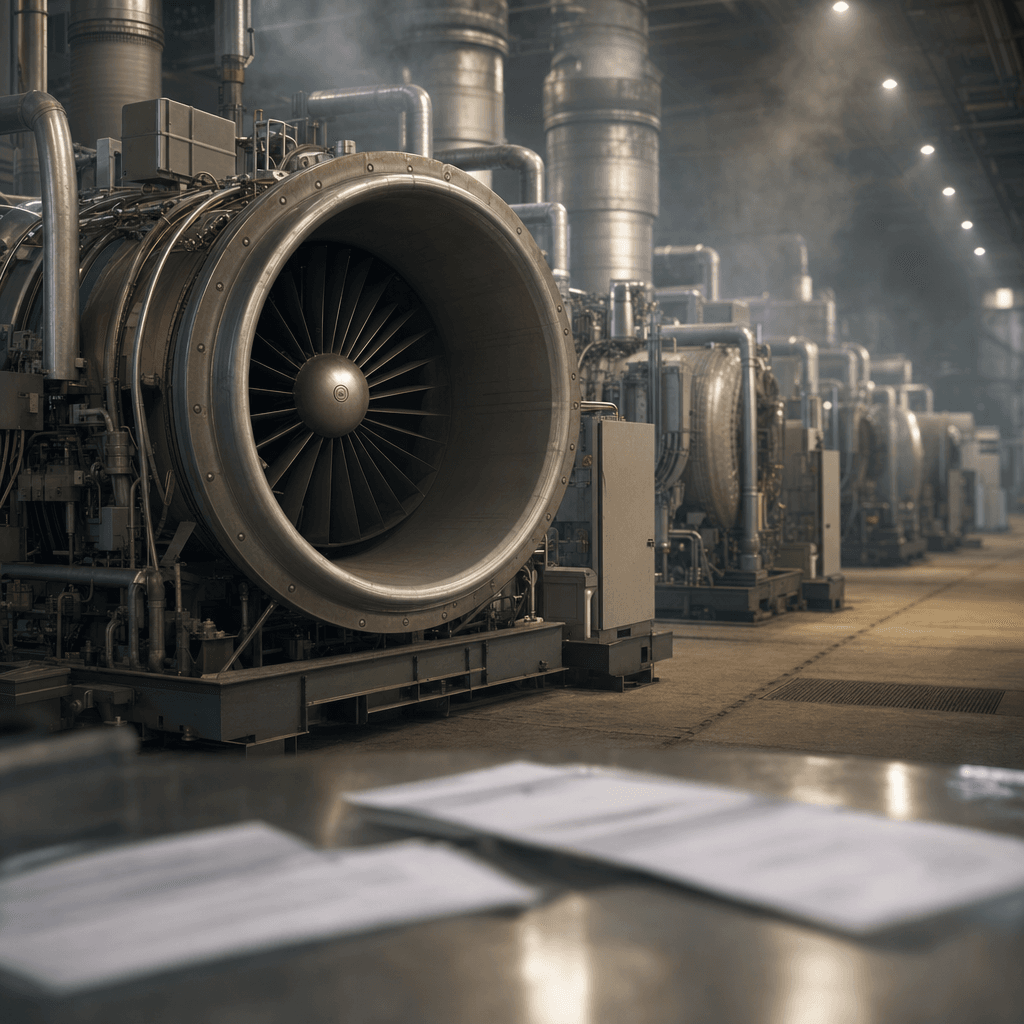
xAI, Elon Musk’s artificial intelligence venture, is now facing legal action over its unconventional power setup at the Colossus 2 data center in Mississippi. The company has been operating nearly 50 gas turbines classified as “mobile” units to sidestep environmental regulations – a move that’s drawn a lawsuit challenging whether massive AI infrastructure can exploit loopholes meant for temporary power sources. The case puts a spotlight on AI’s growing energy appetite and the regulatory gray zones companies are exploiting to fuel their data center ambitions.
xAI just got hit with a lawsuit that could redefine how AI companies power their massive data centers. The complaint, filed over the company’s Colossus 2 facility in Mississippi, alleges that xAI has been running nearly 50 natural gas turbines without the environmental permits typically required for permanent power installations.
The legal challenge centers on a classification sleight of hand. By labeling the turbines as “mobile” units, xAI appears to have skirted regulations designed to limit air pollution from stationary power plants. It’s a creative interpretation of rules written long before AI’s energy demands exploded – and one that environmental groups are now contesting in court.
The Colossus 2 data center represents xAI‘s aggressive push to compete with rivals like OpenAI and Google in the race to build ever-larger AI models. These facilities require enormous amounts of electricity to train and run large language models, creating an infrastructure challenge that’s forcing companies to get creative about power generation. But creativity is bumping up against environmental law.
According to TechCrunch, the gas turbines at the Mississippi site have been operating as de facto power plants – a setup that would normally trigger stringent air quality reviews and emissions monitoring requirements. The “mobile” designation was apparently meant for temporary installations like emergency backup generators or construction sites, not permanent infrastructure supporting a sprawling AI campus.
This isn’t just a technical regulatory dispute. It’s emblematic of a broader tension as AI companies rush to build out infrastructure faster than regulators can adapt. Microsoft has explored resurrecting nuclear plants, Google is investing heavily in renewable energy contracts, and now xAI is testing whether existing rules can accommodate what amounts to a private natural gas power station.
The Mississippi facility’s power setup also raises questions about the environmental cost of AI development. While tech companies tout their climate commitments, the reality is that training frontier AI models requires staggering energy inputs. Natural gas, though cleaner than coal, still produces significant carbon emissions and air pollutants – precisely what environmental regulations are designed to control.
For Elon Musk, who also runs Tesla and has positioned himself as a champion of sustainable energy, the lawsuit creates an awkward juxtaposition. His AI company is now accused of exploiting regulatory loopholes to run fossil fuel generators without oversight, while his automotive company sells electric vehicles marketed as climate solutions.
The legal challenge could have ripple effects across the AI industry. If courts rule that xAI‘s turbine setup requires full environmental review and permitting, it could slow down similar projects and force companies to be more transparent about how they’re powering their AI ambitions. That might mean longer timelines, higher costs, or more scrutiny of the environmental tradeoffs inherent in the AI boom.
Mississippi’s business-friendly regulatory environment likely made it an attractive location for xAI‘s expansion. But even in states eager to attract tech investment, there are limits to what companies can do without triggering environmental oversight. This lawsuit will test where those boundaries lie when cutting-edge technology meets decades-old air quality laws.
The case also arrives as public awareness grows about AI’s resource consumption. Data centers already account for roughly 1-2% of global electricity use, and that share is climbing as AI workloads intensify. Companies can’t simply wave away those demands with accounting tricks or creative permit classifications – eventually, the physical infrastructure has to exist somewhere, powered by something.
Neither xAI nor representatives for Elon Musk have publicly commented on the lawsuit. The company has been notoriously secretive about its operations, releasing limited information about its AI models or infrastructure plans. That opacity is now colliding with regulatory requirements designed to ensure public oversight of major pollution sources.
The lawsuit against xAI isn’t just about gas turbines in Mississippi – it’s a preview of conflicts to come as AI’s infrastructure demands crash into environmental oversight. How courts handle this case could set precedent for whether tech companies can use regulatory workarounds to fast-track their AI ambitions, or whether they’ll face the same scrutiny as traditional industrial polluters. With AI energy consumption projected to keep climbing, the industry can’t rely on classification gimmicks forever. Someone has to answer for the emissions, and this lawsuit is forcing that conversation into the open.









Leave a Reply