
- ■
Meta launches AI conversation insights for parents supervising teen accounts in US, UK, Australia, Canada, and Brazil, with global rollout coming soon
- ■
New Insights tab shows topic categories teens discussed with Meta AI over past week, including School, Entertainment, Health and Wellbeing
- ■
US teen enrollment in parental supervision has more than doubled since last year, according to Meta’s announcement
- ■
Meta establishes AI Wellbeing Expert Council with members from National Council for Suicide Prevention, University of Michigan, and USC
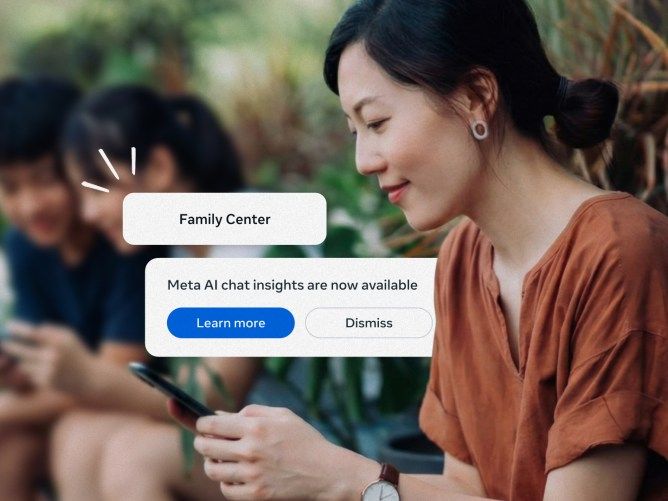
Meta just gave parents a window into their teens’ AI conversations. The company’s rolling out new parental supervision tools that show what topics teens are asking Meta AI about – from homework help to health questions – starting in five countries and expanding globally within weeks. It’s Meta’s latest response to mounting pressure around AI safety for minors, following October’s announcement that promised greater parental oversight of teen AI interactions.
Meta is betting that transparency beats secrecy when it comes to teens and AI. The company just flipped the switch on parental monitoring tools that let parents peek at what their kids are asking Meta AI – without revealing the exact questions themselves.
Starting today, parents using supervision on Facebook, Messenger, or Instagram will see a new Insights tab. Click through and you’ll find broad topic categories their teen explored with Meta AI over the past seven days. Think School, Entertainment, Lifestyle, Travel, Writing, Health and Wellbeing – pretty much the gamut of teenage curiosity, according to Meta’s official blog post.
But Meta’s walking a fine line here. The feature shows topics, not transcripts. Parents can drill down into subcategories – Lifestyle breaks into fashion, food, and holidays, while Health and Wellbeing splits into fitness, physical health, and mental health – but they won’t see the actual questions. It’s designed to spark conversations between parents and teens rather than enable surveillance.
The rollout’s already live for supervised Teen Accounts in the US, UK, Australia, Canada, and Brazil. Global expansion hits in the coming weeks, Meta says. The company’s clearly moving fast after announcing the feature back in October, likely responding to regulatory scrutiny around AI and minors that’s intensified across both sides of the Atlantic.
What’s notable is what Meta AI won’t answer. The assistant’s been tuned to 13+ movie rating standards, meaning it should dodge age-inappropriate questions that wouldn’t fly in a PG-13 film. When Meta AI refuses to respond, parents still see the topic category their teen was probing – a clever middle ground that maintains some privacy while flagging potential concerns.
For the really serious stuff – suicide and self-harm conversations – Meta’s going nuclear. The company announced in February it’s building proactive alerts that directly notify parents if their teen tries discussing these topics with Meta AI. Those alerts are still in development, with more details coming soon.
The timing’s no accident. Meta’s been under fire for how its platforms affect teen mental health, facing lawsuits from dozens of state attorneys general. These parental controls are part of a broader defensive strategy that includes Teen Accounts, which launched with built-in restrictions like time limits and message controls from people teens don’t follow.
And the adoption numbers suggest parents want these tools. US teen enrollment in supervision has more than doubled since last year, Meta claims. That’s a significant jump, though Meta didn’t release specific figures.
To help parents actually use these insights, Meta partnered with the Cyberbullying Research Center to create conversation starters – open-ended questions designed to launch non-judgmental talks about AI use. Each question comes with context about what it’s designed to address and how to approach it. Parents can access these guides through the new Insights tab or the Family Center website.
Behind the scenes, Meta’s assembling academic firepower. The company’s launching an AI Wellbeing Expert Council, pulling from existing advisory groups like Suicide and Self-Harm Advisors, Youth Advisors, and Body Image Experts. New members bring AI ethics expertise from places like the National Council for Suicide Prevention, University of Michigan, University of Texas, and USC.
The council’s already been meeting with Meta teams, providing input on these very parental insights before launch. It’s a smart PR move – getting external validation from credible institutions before rolling out sensitive features related to kids and AI.
But questions remain about implementation. How granular are these topic categories? If a teen asks about depression or anxiety, does that show up under mental health, or does it trigger an alert? Meta’s blog post doesn’t clarify these edge cases, and that ambiguity could determine whether parents find the feature helpful or intrusive.
The feature also only works for Teen Accounts with supervision enabled – and enrollment is voluntary. Teens who opt out or never enroll won’t be monitored, which limits the tool’s reach. Meta’s betting that doubling enrollment numbers mean families want these guardrails, but the company hasn’t shared what percentage of total teen users are actually supervised.
Competitors are watching closely. OpenAI, Google, and Apple are all racing to build AI assistants while navigating similar safety concerns around younger users. Meta’s approach – topic-level transparency plus expert councils – could become an industry template, especially if regulators start mandating parental controls for AI interactions.
Meta’s parental AI monitoring strikes a balance between oversight and privacy, showing topic categories without exposing full conversations. With US teen supervision enrollment doubling and global rollout imminent, the company’s testing whether transparency tools can defuse regulatory pressure while giving parents actual utility. The real test comes when those suicide and self-harm alerts launch – that’s where Meta’s approach shifts from passive monitoring to active intervention, and where the stakes get considerably higher for both the company and families relying on these tools.











Leave a Reply