
ScaleOps just closed a $130 million Series C to tackle one of AI’s most expensive problems: wasted cloud infrastructure. As companies race to deploy AI models, they’re burning through GPUs and cloud budgets at unprecedented rates. The Tel Aviv-based startup promises to cut that waste by automating Kubernetes infrastructure in real time, a pitch that’s resonating as enterprises watch their AI bills spiral out of control.
ScaleOps just pulled off a massive $130 million Series C, betting that the solution to AI’s GPU crisis isn’t just buying more chips – it’s using the ones we have a whole lot smarter.
The funding comes as enterprises face a brutal reality: AI models are expensive to run, GPUs remain scarce, and cloud bills are exploding faster than finance teams can approve them. According to TechCrunch, ScaleOps is positioning itself as the antidote to this infrastructure chaos with automation that optimizes compute resources in real time.
The timing couldn’t be better. While companies like Nvidia can’t manufacture GPUs fast enough and cloud providers struggle to keep pace with AI workload demand, ScaleOps is taking a different angle: make existing infrastructure work harder. The platform automates Kubernetes operations, dynamically adjusting resource allocation as workloads shift throughout the day.
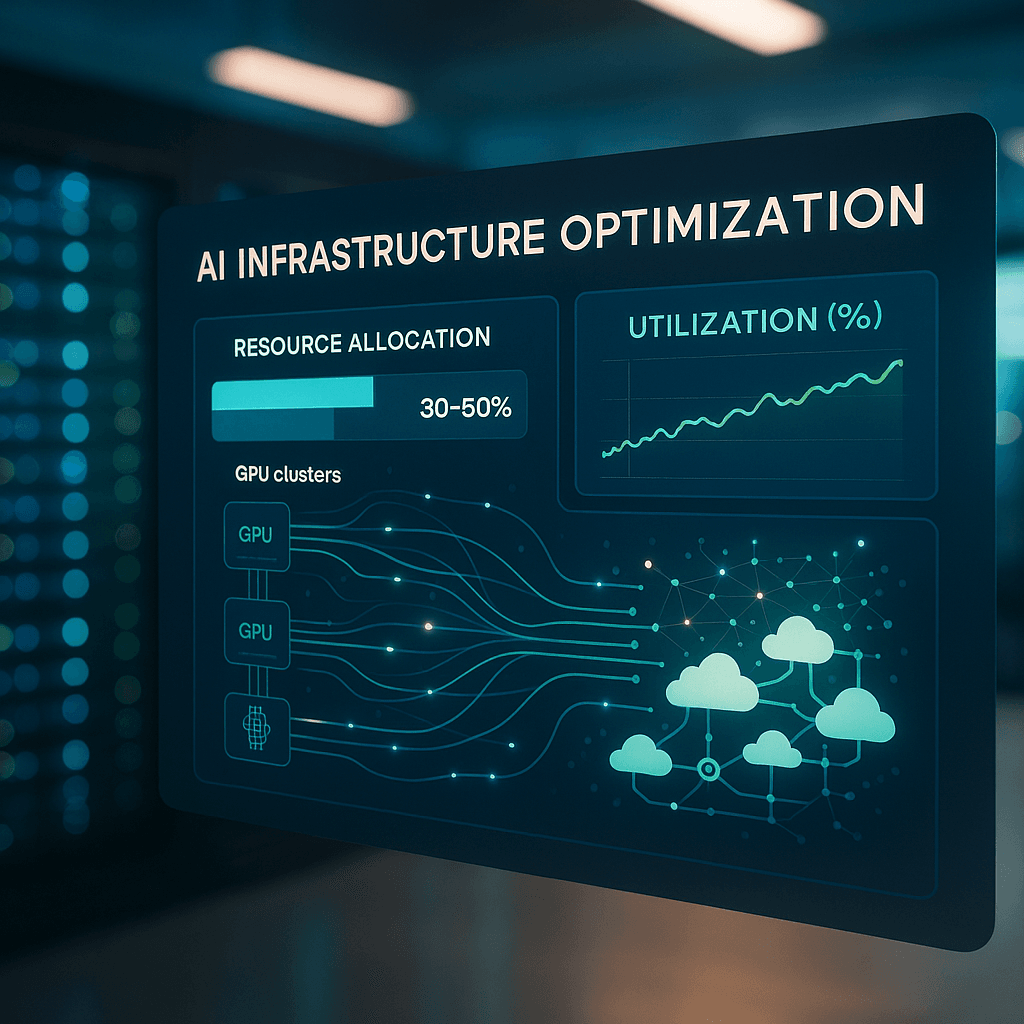
Here’s the problem they’re solving – most enterprise Kubernetes clusters run at somewhere between 30-50% utilization because teams overprovision to avoid performance issues. That means companies are essentially paying double for their cloud infrastructure, a waste that’s tolerable when you’re running web apps but devastating when you’re trying to train AI models on scarce, expensive GPUs.
ScaleOps attacks this by continuously analyzing workload patterns and automatically rightsizing resources without human intervention. When a training job finishes, it immediately reclaims those GPUs. When demand spikes, it scales up before performance degrades. The promise is straightforward: run the same AI workloads on fewer resources, or run more workloads on what you already have.
The $130 million Series C validates that enterprises are desperate for these efficiency gains. Cloud optimization isn’t sexy, but it’s become critical as AI infrastructure costs threaten to consume entire IT budgets. Companies that were spending thousands monthly on cloud infrastructure are now facing bills in the hundreds of thousands – or millions – as they scale AI initiatives.










Leave a Reply