
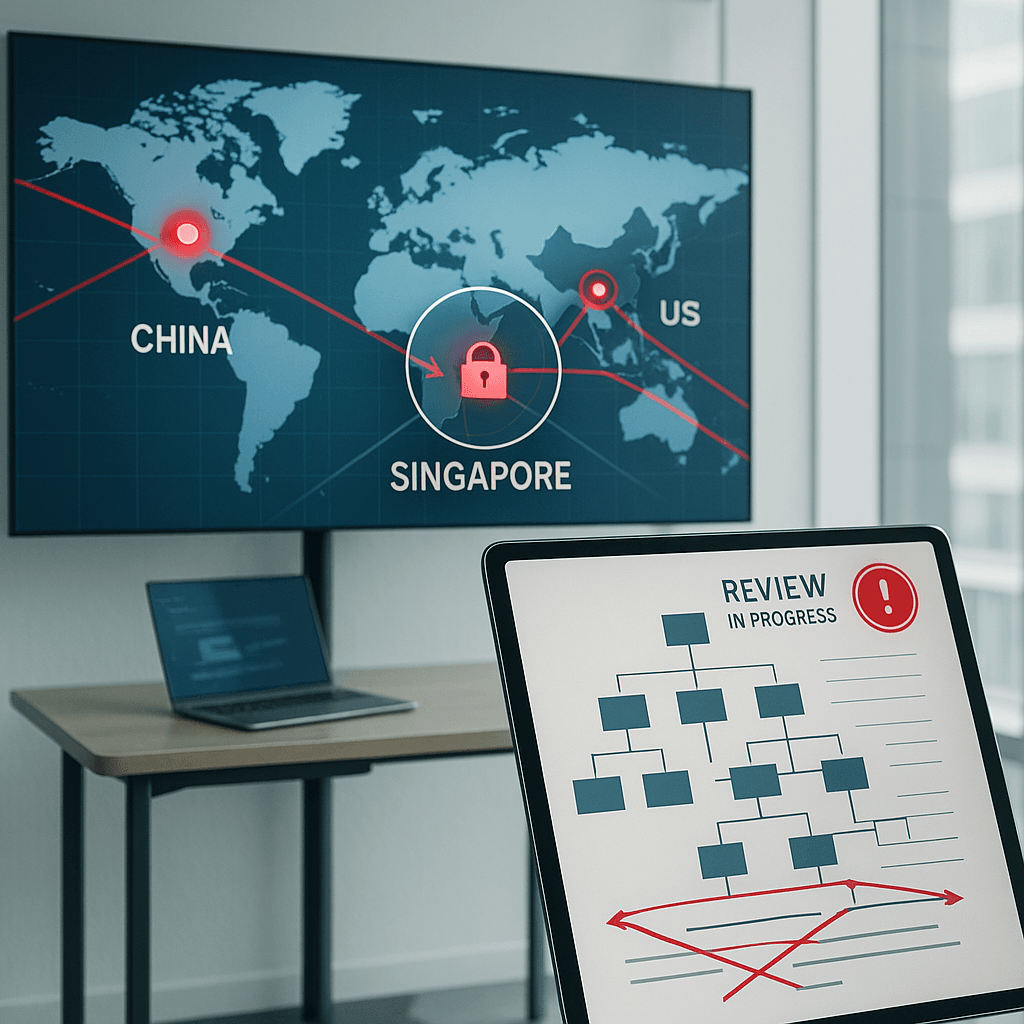
Beijing just threw a wrench into one of venture capital’s favorite workarounds. Chinese regulators have opened a review into Meta’s acquisition of robotics startup Manus, sending shockwaves through founders and investors who’ve been using Singapore-based entities to sidestep geopolitical tensions. The move threatens to upend the so-called ‘Singapore-washing’ playbook that’s become standard practice for Chinese tech startups courting Western capital and acquirers.
Meta thought it had a straightforward robotics acquisition on its hands. Beijing had other ideas. Chinese regulators have unexpectedly launched a review into the social media giant’s purchase of Manus, a move that’s sending tremors through the startup and venture capital world far beyond this single deal.
The intervention marks a rare case of Beijing asserting jurisdiction over a company that, on paper, has nothing to do with China. Manus, like dozens of other startups in recent years, had been structured as a Singapore entity – a strategy that founders and their VC backers believed would keep them clear of both Chinese regulatory oversight and US national security reviews. That assumption is now in serious doubt.
According to sources familiar with the matter reported by CNBC, Beijing’s review has sparked immediate concern and confusion among Chinese tech entrepreneurs who quietly adopted what insiders call the ‘Singapore-washing’ model. The playbook goes like this: incorporate in Singapore, staff up with Chinese engineering talent, take money from international VCs, and hope to exit to Western acquirers without triggering the regulatory minefields that have torpedoed other cross-border tech deals.
For years, this structure seemed like the perfect solution to an impossible problem. Chinese founders got access to Silicon Valley capital and expertise. American VCs got exposure to Chinese technical talent without the compliance headaches. Singapore got to position itself as Asia’s neutral tech hub. Everyone won – or so they thought.
The Manus intervention suggests Beijing sees things differently. While details of the review remain scarce, the mere fact that Chinese regulators are asserting oversight over a Singapore-incorporated company represents a significant expansion of Beijing’s regulatory reach. It implies that Chinese authorities may look through corporate structures to examine the underlying reality: where founders are from, where engineering teams sit, and where intellectual property actually gets developed.










Leave a Reply