
- ■
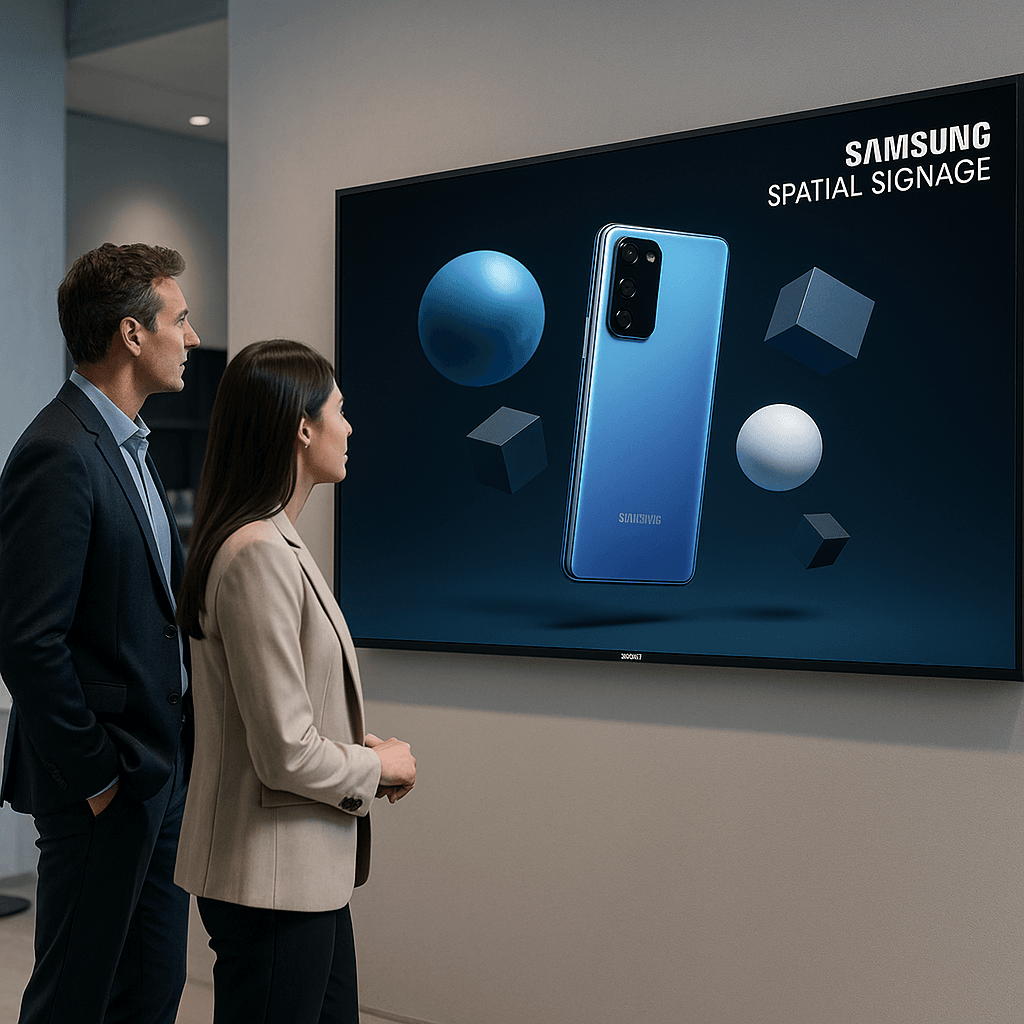
Samsung unveiled Spatial Signage, an 85-inch glasses-free 3D display using lenticular lens technology to create 500mm perceived depth from a 3-4mm optical plate
- ■
The display won awards at IFA 2025, CES 2026 and ISE 2026, targeting B2B markets like retail, fitness and education
- ■
Samsung plans 32-inch and 55-inch models later in 2026, with AI Studio content creation launching April 2026
- ■
Engineers solved gravity-induced sagging and moiré effects by developing error-detection patterns during lens production
Samsung is pushing its glasses-free 3D display technology into commercial spaces with Spatial Signage, a 52mm-thin screen that creates depth without headsets. Showcased at ISE 2026 in Barcelona after winning awards at IFA 2025 and CES 2026, the 85-inch display uses what Samsung calls “3D plate technology” – combining lenticular lenses with binocular disparity rendering to send different images to each eye. The move comes as retailers and brands hunt for eye-catching alternatives to bulky LED installations, with Samsung eyeing cafés, gyms, theme parks and education sectors.
Samsung just cracked a problem that’s plagued 3D displays for years – how to deliver depth without forcing viewers to wear glasses or stand in a tiny sweet spot. At Integrated Systems Europe 2026 in Barcelona this February, the company’s Spatial Signage display stopped attendees cold with objects that appeared to float inside an 85-inch screen, rotating in midair with no headset required.
The technology arrives as brands scramble for display solutions that break through the noise. “We’re seeing rising interest in visually striking content that captures attention, such as ultra-large LED-based anamorphic displays,” Jong-Gu Sun from Samsung’s Visual Display Business told Samsung Newsroom. “However, these installations typically require more space than traditional signage and dedicated 3D content.”
Spatial Signage sidesteps those constraints with what Samsung calls 3D plate technology – a system that marries displays with optical components to exploit binocular disparity, the brain’s natural depth perception mechanism. Think of those lenticular cards that shift images as you tilt them, but engineered for an 85-inch commercial display.
“The system combines a display with optical components to send separate images to each eye, applying the principle of binocular disparity so the brain perceives depth,” explained Chang-Kun Lee from Samsung Research. The trick is rendering the main subject in high-res 2D while using the 3D plate to create depth in the background – solving the image quality and viewing angle problems that killed earlier glasses-free 3D attempts.









Leave a Reply