
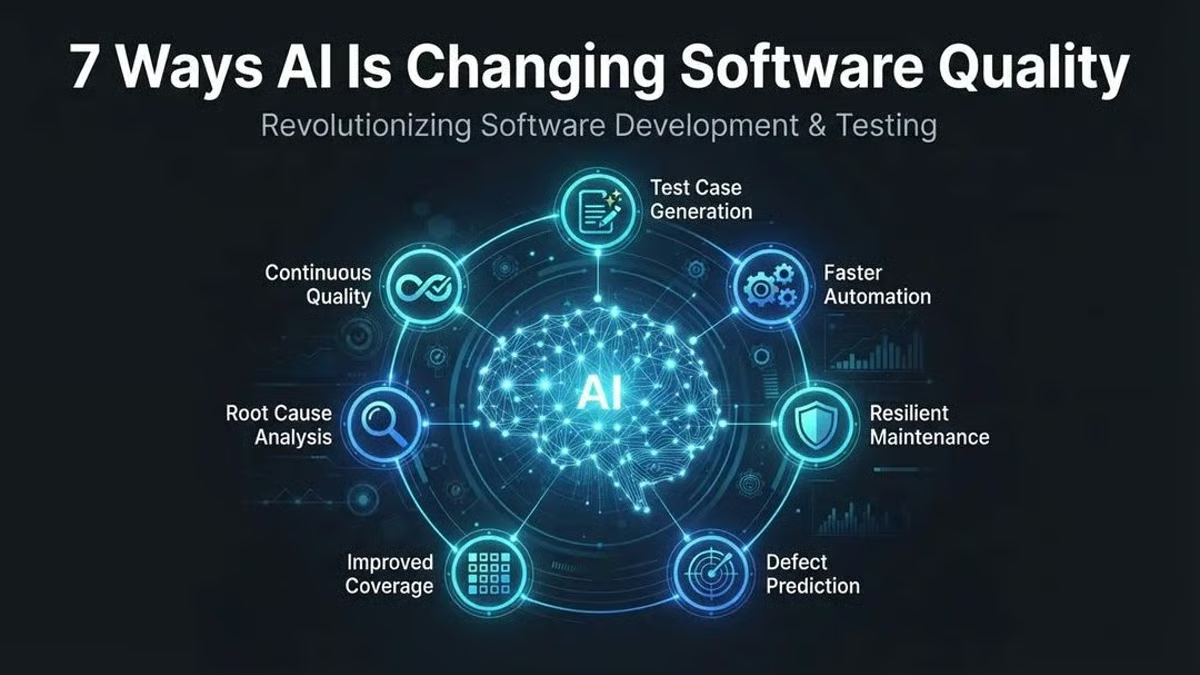
Artificial intelligence is changing nearly every stage of software development, and quality assurance is no exception. Testing teams are using AI to work faster, identify risks earlier, and reduce the repetitive work traditionally associated with maintaining test suites. As software becomes more complex, these capabilities are giving teams new ways to maintain quality without slowing down development.
In this blog, we will explore seven ways AI is changing how organizations approach software quality. From smarter test creation to faster failure analysis, AI is helping teams make testing more efficient and proactive. These changes are also reshaping how developers, testers, and product teams work together to deliver more reliable applications.
1. Smarter Test Case Generation
Creating effective test cases can take considerable time, especially for complex applications with many workflows and possible user actions. AI can analyze requirements, application behavior, and existing test data to help identify relevant scenarios and generate tests more efficiently. This allows QA teams to spend less time creating repetitive cases and more time evaluating whether their testing strategy covers meaningful business risks.
2. Faster Test Automation
Traditional test automation often requires scripting knowledge, framework configuration, and ongoing technical effort. Modern AI-based software testing tools are making automation more accessible by allowing teams to create tests using natural language and intelligent application analysis. Platforms such as testRigor, for example, demonstrate how AI-driven approaches can simplify test creation and help teams build automation around user behavior rather than relying heavily on implementation details. This can reduce the technical barrier for team members who understand business requirements but may not have extensive programming experience. As a result, organizations can expand their automation efforts and receive feedback on application quality more quickly.
3. More Resilient Test Maintenance
Test maintenance is one of the biggest challenges teams face as their applications evolve. Small interface or implementation changes can cause traditional automated tests to fail even when the actual user experience still works correctly. AI can help testing systems better understand application context and adapt to certain changes, reducing unnecessary failures and the amount of time teams spend repairing tests.
4. Better Defect Detection and Prediction
Finding defects is useful, but identifying where they are most likely to appear can make testing even more effective. AI can analyze historical defects, test results, logs, and development patterns to identify areas that may carry greater risk. Teams can then prioritize their testing efforts around those areas, potentially catching critical issues earlier in the development cycle.
5. Improved Test Coverage
Running more tests does not automatically mean an application is being tested thoroughly. AI can help teams analyze application workflows, existing tests, and usage patterns to identify scenarios that may be missing from their test suites. By focusing on meaningful coverage instead of simply increasing test volume, organizations can test a wider range of behaviors while using their QA resources more efficiently.
6. Faster Root Cause Analysis
When an automated test fails, determining why it failed can sometimes take longer than running the test itself. AI can assist by analyzing logs, previous test executions, failure patterns, and other available information to highlight possible causes. It can help teams distinguish between application defects, test issues, environment problems, and other sources of failure. Faster analysis helps developers and testers spend less time investigating false alarms and more time addressing genuine software problems. Shortening this investigation process can also improve feedback cycles and help teams resolve issues before they affect later stages of development.
7. A Shift Toward Continuous Quality
AI is also contributing to a broader shift from testing software at specific stages to continuously considering quality throughout development. Faster automation, intelligent analysis, and earlier feedback allow teams to identify potential problems while features are still being developed. This encourages developers, testers, and product teams to share responsibility for quality rather than treating testing as a final checkpoint before release.
Conclusion
AI is changing software quality by making testing more intelligent, adaptable, and efficient. From generating test cases and improving coverage to simplifying maintenance and accelerating root cause analysis, AI gives teams new ways to address long-standing QA challenges. These capabilities can help organizations detect issues earlier and maintain quality while development cycles continue to accelerate.
The role of human expertise remains important as these technologies evolve. AI can handle repetitive tasks and analyze large amounts of information, while testers provide context, judgment, creativity, and an understanding of real user expectations. Combining these strengths can help teams build a more proactive approach to software quality and deliver applications that users can trust.










Leave a Reply