
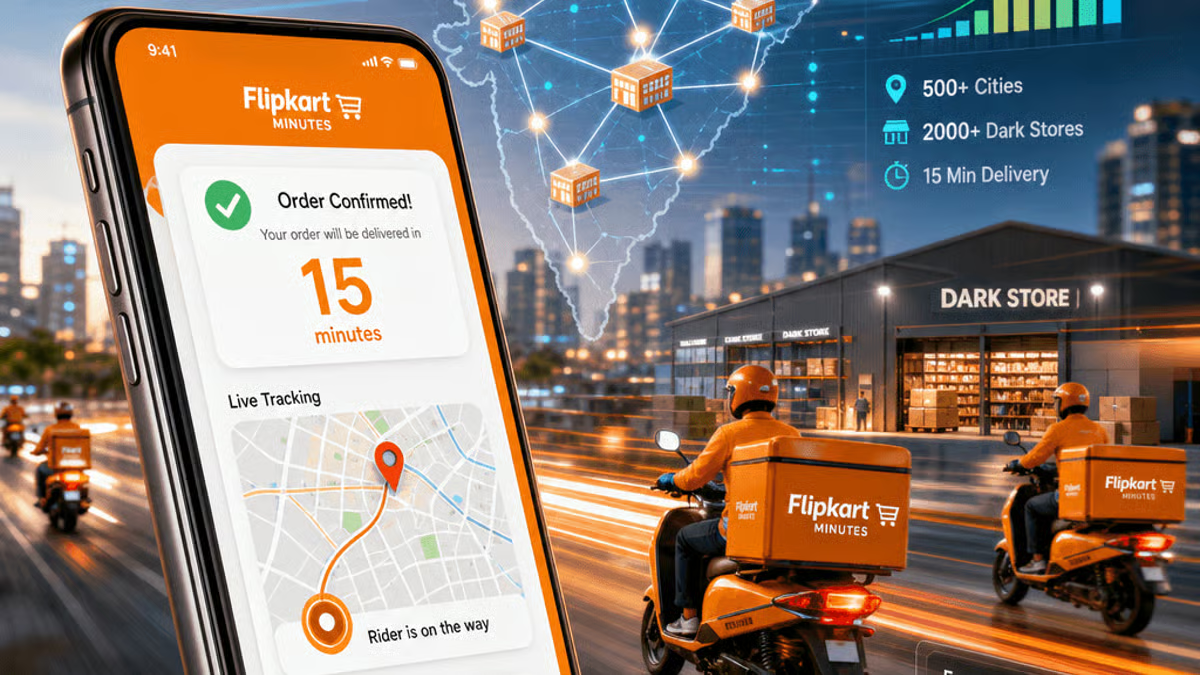
Flipkart, the Walmart-owned e-commerce giant, is making serious headway in India’s fiercely competitive quick-commerce war. The company’s delivery arm now processes between 1.1 million and 1.2 million orders daily – nearly triple its volume from last November, according to TechCrunch. Two years after entering the instant delivery race, Flipkart is rapidly closing the gap on established players like Blinkit, Swiggy Instamart, and Zepto, signaling that Walmart’s bet on India’s $6 billion quick-commerce market is paying off.
Flipkart just threw down the gauntlet in India’s quick-commerce arena. The Walmart-backed platform is now processing between 1.1 million and 1.2 million orders every single day through its instant delivery service – a staggering jump from the roughly 400,000 daily orders it handled back in November, sources familiar with the matter told TechCrunch.
The numbers reveal how quickly the landscape is shifting. When Flipkart launched its quick-commerce arm two years ago, skeptics questioned whether the e-commerce veteran could pivot fast enough to compete with nimble, delivery-first startups. Those doubts are evaporating as the company demonstrates it can match the blistering growth rates of competitors who’ve been in the game longer.
Blinkit, which Zomato acquired in 2022, currently leads the pack alongside Swiggy Instamart and the hyper-funded Zepto. But Flipkart’s tripling of order volume in just nine months shows the company isn’t just participating – it’s hunting for market leadership. With Walmart’s deep pockets and Flipkart’s existing logistics infrastructure across 20,000+ pin codes, the company has advantages most startups can’t match.
India’s quick-commerce sector has become a pressure cooker of competition and capital. The market, projected to hit $6 billion in gross merchandise value this year, has attracted billions in venture funding as companies race to build dark store networks and perfect 10-minute delivery promises. Zepto alone raised over $1 billion in recent funding rounds, while Swiggy poured resources into Instamart ahead of its public market debut.
What separates Flipkart’s approach is its integration with an existing e-commerce empire. Unlike pure-play quick-commerce startups, Flipkart can leverage customer data from millions of shoppers already buying everything from smartphones to fashion on its platform. That cross-pollination creates opportunities for targeted quick-commerce offerings that complement longer-delivery purchases.
The operational challenge is massive. Quick-commerce requires hyperlocal inventory spread across hundreds of micro-warehouses, AI-powered demand forecasting, and delivery networks that can consistently hit 15-20 minute windows. Every player is burning cash to subsidize deliveries and acquire customers, betting that scale will eventually produce unit economics that work. Flipkart’s growing order volume suggests it’s figured out the playbook, but profitability remains elusive across the entire sector.
Competitors aren’t standing still. Blinkit has been expanding beyond groceries into electronics and fashion, while Zepto recently launched a café vertical and continues opening dark stores at breakneck speed. Swiggy Instamart benefits from synergies with its food delivery business, creating a one-two punch that keeps users engaged across use cases.
The stakes extend beyond India. Walmart has been watching Amazon build its own quick-commerce capabilities in the country, and Flipkart’s success gives the American retail giant a credible answer to Jeff Bezos’s ambitions. For Walmart, which acquired a majority stake in Flipkart for $16 billion in 2018, proving the quick-commerce model works in India could inform strategies for other emerging markets.
Industry watchers note that current growth rates can’t continue forever – eventually the market will consolidate as weaker players run out of funding or get acquired. But with 1.2 million daily orders and climbing, Flipkart has positioned itself as one of the survivors when that shakeout arrives. The company’s ability to triple volumes while maintaining service quality suggests its infrastructure can scale further as demand grows beyond metro cities into tier-2 and tier-3 towns.
What happens next depends partly on how long investors stay patient with cash-burn business models. Quick-commerce companies are essentially asking backers to fund land grabs now in exchange for dominant positions later. Flipkart’s advantage is that Walmart can afford to play the long game, unlike venture-backed competitors facing pressure to show paths to profitability or exit.
For Indian consumers, the competition translates to better service, wider selection, and aggressive promotions as platforms fight for wallet share. The convenience of 15-minute grocery deliveries has already changed shopping habits in major cities – and as Flipkart’s expansion shows, that behavioral shift is accelerating across the country.
Flipkart’s surge to 1.2 million daily orders proves that India’s quick-commerce market has room for multiple heavyweights, not just startup disruptors. With Walmart’s resources behind it and order volumes tripling in nine months, the e-commerce giant has transformed from quick-commerce latecomer to legitimate threat against Blinkit, Swiggy, and Zepto. The real test comes next – whether any of these players can convert breakneck growth into sustainable profits, or if this arms race simply reshapes who controls India’s last-mile delivery future. For now, the battle is just heating up, and consumers are the clear winners as platforms pour billions into faster, cheaper, more convenient delivery.











Leave a Reply