

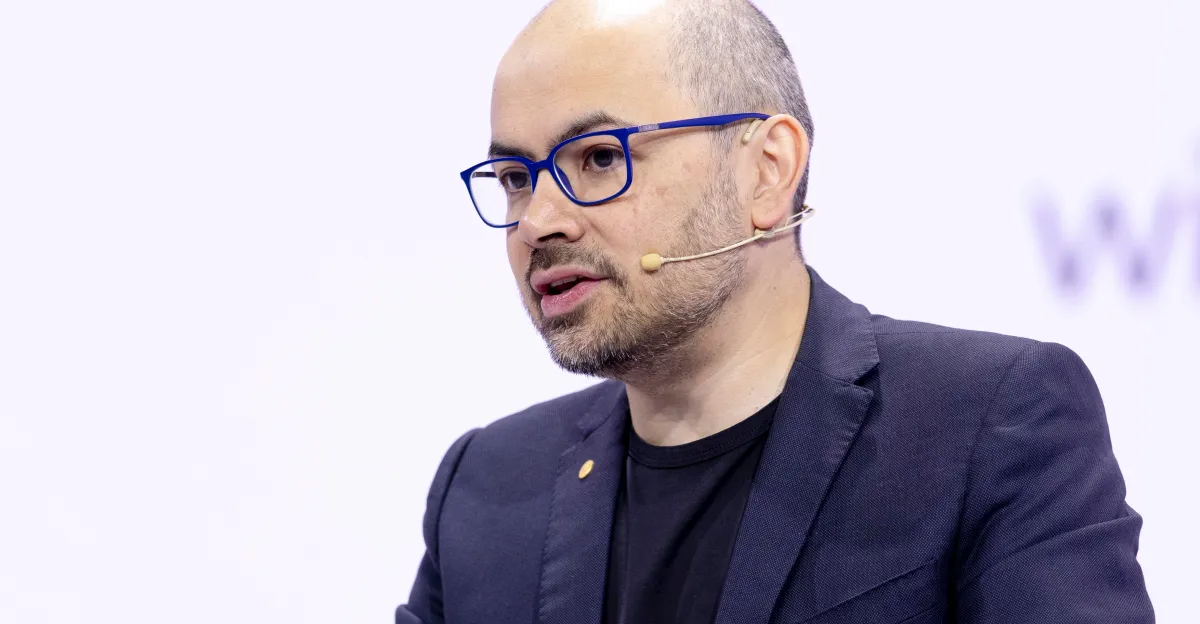
Google CEO Sundar Pichai just announced organizational changes affecting Google DeepMind teams, according to a company blog post titled “The next chapter of our AI momentum.” While details remain sparse, the timing comes as the search giant doubles down on AI development amid fierce competition from OpenAI, Microsoft, and Anthropic. The announcement signals another strategic pivot in Google’s AI operations.
Google CEO Sundar Pichai signaled a new phase in the company’s AI strategy today, announcing changes to Google DeepMind teams in what he’s calling “the next chapter of our AI momentum.” The announcement, published on Google’s official blog, offers few specifics but suggests the tech giant is reshuffling its AI operations as competition heats up.
The timing is notable. Google has been racing to maintain its edge in artificial intelligence after OpenAI‘s ChatGPT launch caught the industry off guard in late 2022. The company merged its AI research lab DeepMind with the Google Brain team in April 2023 to create Google DeepMind, a consolidation meant to accelerate development and reduce internal friction.
Now, three years into that merger, Pichai’s message hints at another evolution. The sparse announcement – just a single sentence noting “some changes with Google DeepMind teams” – leaves industry watchers guessing about what’s actually shifting under the hood. Is this a leadership reshuffle? A project reorganization? A response to competitive pressure from Microsoft‘s AI investments or Anthropic‘s Claude models?
Google DeepMind has been at the center of the company’s AI ambitions, driving everything from the Gemini large language model to AlphaFold’s protein-folding breakthroughs. Any organizational changes here ripple through Google’s entire product lineup, from Search to Android to Cloud.
The company has faced mounting pressure to show returns on massive AI investments. Alphabet spent over $31 billion on research and development in 2025, much of it funneled into AI infrastructure and talent. Competitors haven’t stood still – Microsoft’s partnership with OpenAI has reshaped enterprise software, while Anthropic raised billions to challenge Google’s research dominance.
Industry analysts have been expecting Google to make moves. “They can’t keep running AI research and product development in parallel tracks forever,” one former Google executive told The Information last month. “Something has to give.” Today’s announcement might be that inflection point.
What makes this particularly intriguing is Pichai’s framing around “momentum.” Google rarely uses that language unless it’s signaling confidence or deflecting from challenges. The question is which one this is. The company’s AI products have gained traction – Gemini models power Search, Workspace, and Android features – but public perception still lags behind ChatGPT’s cultural footprint.
The lack of detail in today’s message suggests this might be the opening salvo in a larger announcement. Google typically pre-announces major organizational shifts before rolling out specifics over days or weeks. Employees often hear details internally before the public does, meaning more information could leak through workplace forums or industry sources in the coming hours.
For now, the AI community is left parsing a single sentence for clues about one of the world’s most influential AI organizations.
Google’s cryptic DeepMind announcement raises more questions than answers, but the subtext is clear – the company is recalibrating its AI operations as the competitive landscape shifts. Whether this is a routine optimization or a signal of deeper strategic changes will become apparent in the coming days. For investors, employees, and competitors watching Google’s every move in AI, Pichai’s brief message is a reminder that even the most powerful players are still figuring out how to win the AI race. Watch for follow-up announcements and internal leaks that typically follow these kinds of CEO messages.






Leave a Reply