
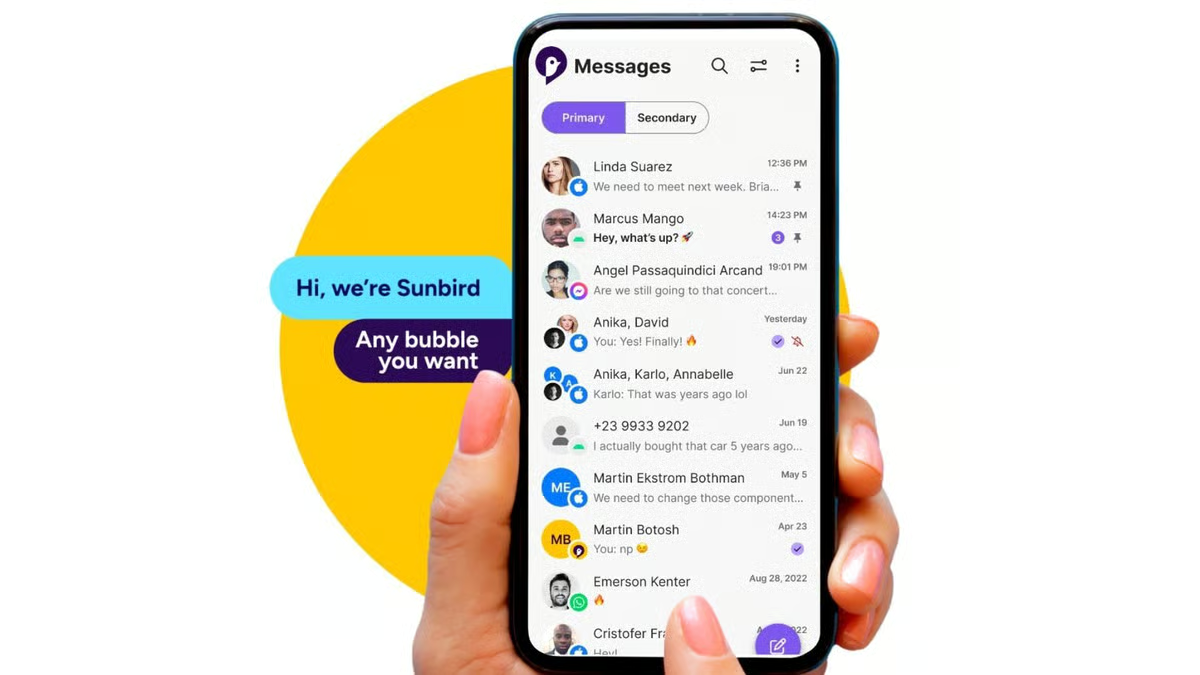
Sunbird Messaging just made a comeback nobody saw coming. Three years after shutting down amid serious security concerns, the controversial app is back on the Google Play Store, offering Android users the holy grail of cross-platform texting – blue bubbles in iMessage – for $2.99 a month. Despite Apple and Google rolling out RCS support to ease the green-bubble stigma, Sunbird’s betting there’s still a market for Android users desperate to blend seamlessly into iPhone group chats.
Sunbird Messaging is making a second run at solving one of tech’s most annoying problems – the blue bubble versus green bubble divide. The app quietly reappeared on the Google Play Store this week, offering Android users full iMessage integration for $2.99 monthly, according to Android Authority.
It’s a bold move considering Sunbird’s troubled history. The company abruptly shut down in November 2023 after security researchers discovered the app was sending messages in plain text and storing them on servers accessible to anyone who knew where to look. That disaster also torpedoed Nothing’s Chats app, which relied on Sunbird’s infrastructure.
Now Sunbird insists it’s fixed those fundamental flaws. “Any message moving through our infrastructure is protected in transit and released once it’s delivered,” the company said in a press release. But the company didn’t provide technical details about its encryption implementation or whether independent security researchers have vetted the new system.
The timing is curious. Apple and Google spent the past year implementing RCS (Rich Communication Services) support across iOS and Android, largely solving the cross-platform messaging headache. RCS brings read receipts, typing indicators, and better media quality to conversations between iPhone and Android users. But it doesn’t turn green bubbles blue, and Android users can still break certain iMessage features in group chats like threaded replies and specific reaction types.
That’s where Sunbird sees its opening. The app promises full iMessage compatibility – blue bubbles, reactions, high-quality video sharing, and seamless group chat integration. For Android users in predominantly iPhone social circles, that $2.99 monthly fee might seem worth it to avoid being the person who “ruins” the group chat.
But Sunbird’s approach requires significant trust. The app works by routing messages through its own servers, which then communicate with Apple’s iMessage infrastructure. That means Sunbird sits between you and your conversations – a middleman with access to everything you send and receive. The company’s previous security failures make that a tough sell, even with promises of improved encryption.
The broader question is whether there’s actually a market here. RCS adoption is accelerating, and most of the practical friction between iOS and Android messaging has evaporated. What remains is mostly social – the perceived status associated with blue bubbles versus green ones. Sunbird is essentially charging a monthly fee to solve a branding problem.
Competitors have tried and failed to bridge this gap. Beeper, another iMessage-for-Android service, faced constant technical challenges as Apple repeatedly blocked its workarounds. The company eventually pivoted to a broader messaging aggregation strategy. AirMessage and BlueBubbles require users to set up Mac mini servers, adding complexity most people won’t tolerate.
Sunbird’s relaunch also comes with new AI features the company says will include a “priority inbox” and “agentic AI” capabilities, though details remain vague. It’s unclear whether these additions will be enough to differentiate Sunbird from free alternatives or justify the subscription cost.
The app’s success will likely depend on how aggressively Apple responds. The company has historically been hostile to third-party iMessage bridges, viewing them as security risks and potential violations of its terms of service. If Apple decides to block Sunbird’s access like it did with previous attempts, paying users could find themselves suddenly cut off.
For now, Sunbird represents an interesting test case – can a company charge for social cachet in the form of blue bubbles, despite free alternatives and a checkered security history? The answer will reveal whether the blue bubble stigma runs deep enough to sustain a subscription business.
Sunbird’s comeback is less about technical innovation and more about betting that social pressure still outweighs security concerns for some Android users. With RCS solving most practical messaging problems between platforms, the company is essentially monetizing status anxiety. Whether that’s a viable business model depends on how badly people want blue bubbles – and whether they’re willing to trust a company that already failed spectacularly at protecting their messages once before.









Leave a Reply