
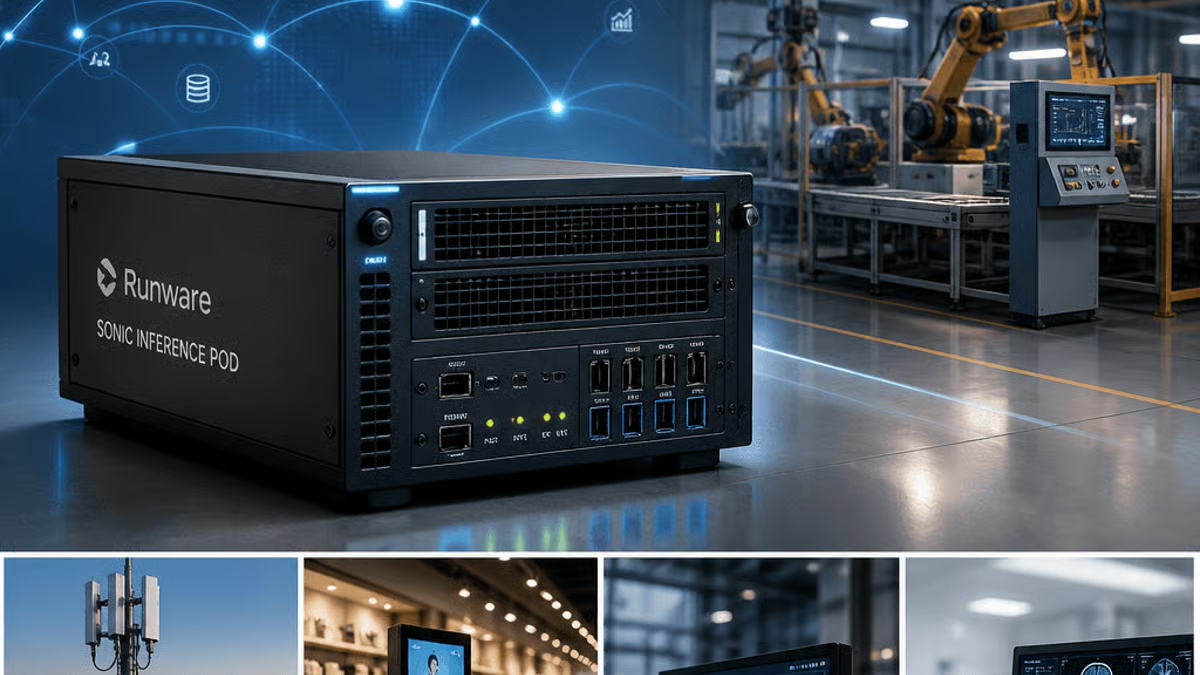
AI infrastructure is getting a lot more portable. Runware, an emerging player in the AI compute space, just launched the Sonic Inference Pod – a modular data center designed to bring AI processing closer to where it’s needed. The move signals a growing shift toward distributed, edge-based AI infrastructure as companies grapple with latency, cost, and the physical limitations of traditional data centers.
Runware is betting the future of AI infrastructure doesn’t look like massive warehouse complexes in Oregon or Iowa. On Tuesday, the AI infrastructure company unveiled the Sonic Inference Pod – a self-contained, modular data center purpose-built for running AI inference workloads wherever they’re needed most.
The announcement, reported by TechCrunch, comes as the industry wrestles with a fundamental infrastructure problem. Traditional hyperscale data centers offer massive compute power, but they’re geographically concentrated, power-hungry, and can’t solve the latency issues that plague real-time AI applications. If your autonomous vehicle needs to make split-second decisions, routing requests to a data center 2,000 miles away isn’t going to cut it.
That’s where modular, portable solutions like Runware’s pod enter the picture. These aren’t new shipping containers with a few servers thrown inside. Modern modular data centers pack serious compute density into portable form factors, complete with cooling systems, power management, and networking infrastructure. They can be deployed at cell towers, manufacturing facilities, retail locations, or anywhere low-latency AI processing matters.
The Sonic Inference Pod specifically targets AI inference – the production phase where trained models actually make predictions and generate outputs. This is distinct from training, which requires massive clusters of GPUs running for weeks or months. Inference workloads are often smaller but need to happen fast and repeatedly, making them ideal candidates for distributed deployment.
Runware’s entrance into modular infrastructure reflects broader market dynamics. Companies like Nvidia have been pushing edge AI computing hard, while hyperscalers like Amazon Web Services and Microsoft Azure have rolled out edge computing services. But there’s growing demand for turnkey solutions that don’t require building custom infrastructure or negotiating complex cloud contracts.
The economics make sense too. Instead of paying for round-trip network latency and cloud egress fees every time an AI model runs, companies can deploy compute where their data already lives. For industries like manufacturing, healthcare, or retail with strict data residency requirements, keeping inference local isn’t just faster – it’s often mandatory.
What remains unclear is the pod’s technical specifications. Runware hasn’t disclosed details about GPU configurations, power requirements, cooling capabilities, or pricing models. Those details matter enormously. A modular data center that requires three-phase power and industrial cooling is far less flexible than one that can run on standard electrical infrastructure.
The competitive landscape is getting crowded. Dell and HPE have offered modular data center solutions for years, though not specifically optimized for AI inference. Startups like Crusoe Energy are building distributed computing infrastructure powered by stranded energy sources. Google has experimented with shipping container data centers since 2005, though those were primarily for internal use.
Runware’s challenge will be proving it can deliver better economics, performance, or deployment flexibility than existing alternatives. The company appears to be positioning itself as an AI-native infrastructure provider rather than a general-purpose data center vendor. That focus could be an advantage if the product is genuinely optimized for inference workloads rather than adapted from generic server infrastructure.
The timing is notable. AI infrastructure spending is projected to hit new records as companies move from experimental AI projects to production deployments. Edge AI, in particular, is seeing explosive growth in autonomous systems, industrial automation, and real-time analytics applications. All of those use cases benefit from compute that’s physically closer to sensors, cameras, and end users.
For Runware, this launch represents a significant bet on distributed AI architecture. If the industry continues centralizing around a handful of massive GPU clusters owned by OpenAI, Meta, and cloud providers, modular edge solutions might remain niche. But if AI inference becomes truly ubiquitous – running in cars, factories, hospitals, and retail stores – portable, plug-and-play infrastructure could become essential.
The next few quarters will reveal whether Runware can gain traction with enterprise customers. Pilot deployments, case studies showing real-world performance improvements, and customer testimonials will all be critical signals. So will technical transparency about what’s actually inside these pods and how they compare to alternatives.
Runware’s Sonic Inference Pod arrival marks another step toward the decentralization of AI infrastructure. Whether portable, modular data centers become the norm or remain specialized solutions for edge cases depends on how AI deployment patterns evolve. But for companies tired of latency, cloud costs, and geographic constraints, the appeal of bringing the data center to the data – rather than the other way around – is undeniable. The real test begins now as Runware moves from announcement to actual customer deployments.









Leave a Reply