
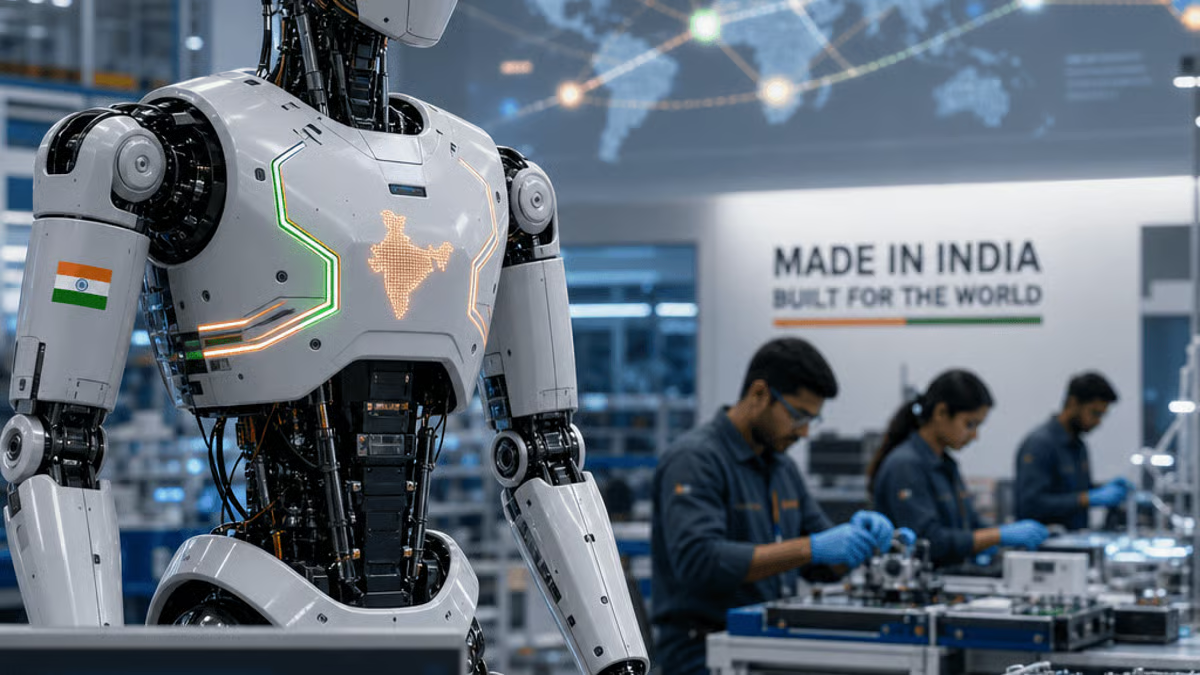
While most robotics companies scramble to untangle their Chinese supply chains, one Indian startup has already cracked the code. Ati Robotics is assembling humanoid robots almost entirely free of Chinese components – a strategic bet that’s looking prescient as the Trump administration doubles down on restrictions targeting Chinese robotics imports. The timing couldn’t be better for a company that’s been quietly building an alternative supply chain while competitors remain locked into Beijing’s manufacturing ecosystem.
Ati Robotics just made a bet that could reshape the robotics industry. While giants like Tesla and startups worldwide wrestle with Chinese component dependencies, this Indian company built its humanoid robots using an almost entirely China-free supply chain – and Washington’s latest policy moves are proving them right.
The startup assembles its humanoid robots in India, sourcing most components from local and non-Chinese suppliers. Only a handful of parts still come from China, according to Wired’s reporting. It’s a manufacturing strategy that seemed overly cautious just months ago but now looks like sharp foresight as the Trump administration escalates restrictions on Chinese robotics technology.
The timing is critical. US officials have been signaling heightened scrutiny of Chinese-made humanoid robots, citing national security concerns about data collection and potential surveillance capabilities. Companies importing robots with significant Chinese components could face new tariffs, licensing requirements, or outright bans – making Ati’s approach suddenly look like a competitive moat rather than an expensive detour.
Building robots without Chinese parts isn’t easy. China dominates global robotics manufacturing, producing everything from servo motors to vision systems at scales and prices that are hard to match. The country controls crucial elements of the supply chain for actuators, sensors, and even the specialized batteries that power humanoid platforms. Most Western robotics companies, even those assembling products domestically, rely heavily on Chinese components.
But Ati Robotics took a different path from the start. The company bet that geopolitical tensions would eventually force a supply chain reckoning in robotics, much like what happened in semiconductors and telecommunications. By establishing Indian manufacturing early and cultivating non-Chinese suppliers, they avoided the painful transition competitors now face.
The India advantage goes beyond just avoiding Chinese components. The country is rapidly building out its own robotics manufacturing ecosystem, supported by government initiatives aimed at making India a global manufacturing hub. Labor costs remain competitive, and the technical talent pool is deep – India produces hundreds of thousands of engineers annually, many specializing in robotics and automation.
What Ati has accomplished could become a template for other robotics startups trying to navigate the new geopolitical landscape. The playbook involves identifying critical components early, developing relationships with alternative suppliers across multiple countries, and accepting higher initial costs in exchange for long-term supply chain security. It’s the same strategy that’s driven the semiconductor industry’s efforts to reduce China dependence.
The humanoid robot market is exploding, with projections showing the sector could reach billions in value within the next few years. Companies like Figure AI and 1X Technologies have raised massive funding rounds to build general-purpose humanoid robots for warehouses, factories, and eventually homes. But most of these companies still depend on Chinese manufacturing for key components – a vulnerability that could slow their US market ambitions.
Ati’s approach carries risks too. Non-Chinese components often cost more and may not match the performance of established Chinese parts. The company has to work harder to achieve the same level of integration and reliability that comes naturally when using components designed to work together within China’s mature ecosystem. And if US-China tensions ease, Ati’s premium supply chain strategy could leave them at a cost disadvantage.
But right now, the winds are blowing Ati’s direction. The Trump administration shows no signs of softening its stance on Chinese technology, and robotics is increasingly seen as a critical national security concern. European regulators are following similar paths, scrutinizing Chinese robotics imports more carefully. Companies that can credibly claim China-free manufacturing have a story that resonates with both government buyers and security-conscious corporate clients.
The broader lesson extends beyond robotics. As US-China tech decoupling accelerates, companies building hardware need to think about supply chain geography from day one, not as an afterthought. The easy globalization of the 2010s – when you could source the best component from anywhere without political consequences – is over. Now, where you build and who supplies your parts matters as much as what you’re building.
Ati Robotics stumbled into perfect timing, but their China-free strategy represents more than luck – it’s a preview of how hardware startups will need to operate in an increasingly fragmented global economy. As trade restrictions tighten and governments prioritize supply chain security over cost efficiency, the ability to manufacture without Chinese dependencies becomes a feature, not just a political hedge. Whether Ati can capitalize on this advantage depends on execution, but they’ve already solved a problem most competitors are just starting to acknowledge. In the race to build useful humanoid robots, geography might matter as much as the technology itself.








Leave a Reply