
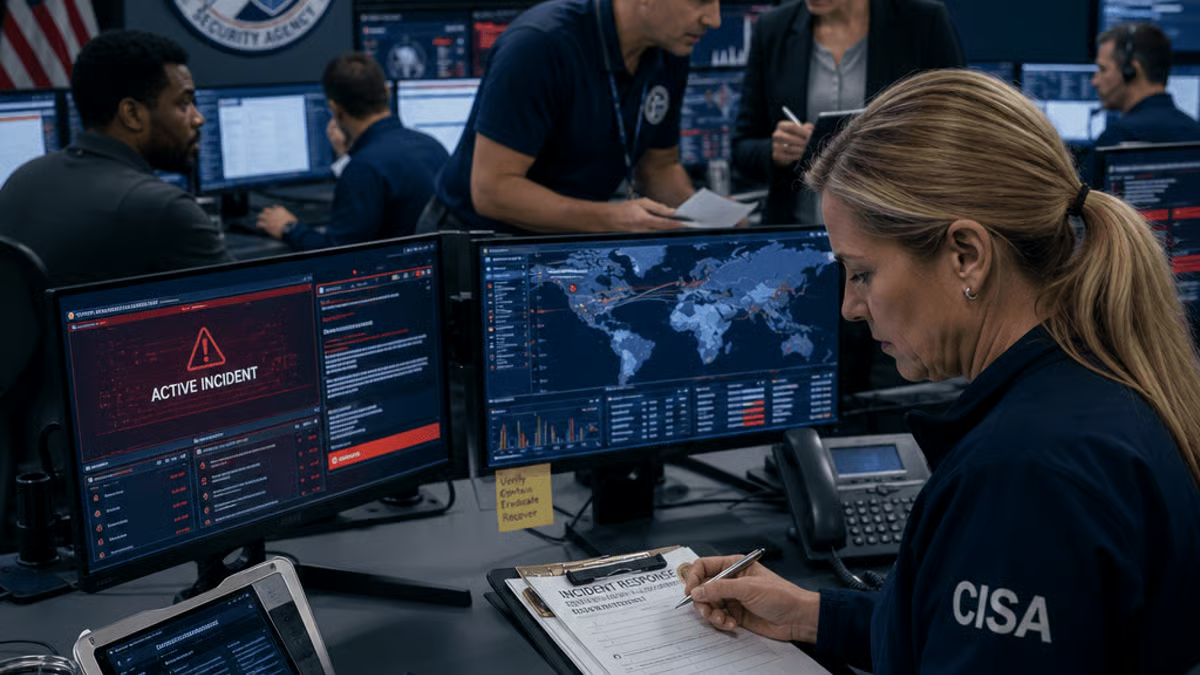
The nation’s top cybersecurity agency just admitted to flying blind during a major security incident. The Cybersecurity and Infrastructure Security Agency revealed it had to create its incident response playbook on the fly, acknowledging it “missed” a critical opportunity to prepare beforehand. The confession raises serious questions about government cybersecurity readiness as agencies face increasingly sophisticated threats.
CISA, the federal agency charged with defending America’s critical infrastructure from cyber threats, just revealed an uncomfortable truth – it had to write the playbook while the game was already underway.
The agency’s candid admission that it lacked a proper incident response plan during an active security event marks a rare moment of transparency from a government organization typically tight-lipped about its internal operations. According to TechCrunch’s reporting, CISA acknowledged it “missed” a crucial window to get ahead of the security incident by failing to establish response procedures beforehand.
The timing couldn’t be more awkward. CISA has spent years positioning itself as the go-to resource for incident response best practices, publishing detailed guidance documents and urging organizations across sectors to prepare comprehensive playbooks before disasters strike. Now it turns out the agency wasn’t following its own advice.
For enterprise security teams watching this unfold, the implications cut deep. If the nation’s cybersecurity quarterback doesn’t have its plays memorized, what does that say about coordination during major incidents affecting critical infrastructure? CISA regularly coordinates responses to attacks on everything from energy grids to water systems to financial networks.
The agency hasn’t disclosed specific details about which incident forced its improvised response, but the confession alone signals internal recognition that something went seriously wrong. In the high-stakes world of cybersecurity incident response, building the plane while flying it isn’t just inefficient – it’s potentially catastrophic.
Cybersecurity experts have long preached the gospel of preparation. Tabletop exercises, documented runbooks, clear chains of command – these aren’t optional extras but fundamental requirements. Every minute spent figuring out who does what during an active breach is a minute attackers use to expand their foothold, exfiltrate data, or cause damage.
The revelation also raises questions about CISA’s internal processes and resource allocation. The agency operates under the Department of Homeland Security and has seen its responsibilities balloon as cyber threats have multiplied. Between ransomware gangs, nation-state espionage operations, and hacktivists, CISA coordinates responses to thousands of incidents annually.
But there’s a difference between responding to incidents affecting other organizations and managing one’s own security crisis. The admission suggests CISA may have been so focused on helping everyone else that it neglected its own readiness posture – a common trap even in the private sector where security teams often secure everything except their own systems.
What makes this particularly noteworthy is the agency’s willingness to own the mistake publicly. In government circles, admitting operational failures rarely happens, especially in national security adjacent areas. CISA could have kept this internal lesson learned quiet. Instead, the disclosure suggests leadership recognizes the teaching moment, both internally and for the broader cybersecurity community.
For CISOs and security leaders in enterprise environments, CISA’s experience reinforces what many learned the hard way – incident response plans gathering dust on SharePoint don’t count. The playbook needs regular testing, updating, and most importantly, the team needs to actually know it exists and how to execute it under pressure.
The admission also highlights a persistent challenge in cybersecurity: the gap between knowing what should be done and actually doing it. Every security professional understands the importance of incident response planning. Yet deadlines, competing priorities, and resource constraints mean these foundational tasks often get pushed to “next quarter.”
CISA’s experience serves as a high-profile reminder that eventually, next quarter becomes too late. When an incident hits, there’s no pause button to draft procedures or debate decision trees. Teams either execute a practiced plan or scramble to invent one under the worst possible circumstances.
CISA’s public acknowledgment of building its incident playbook during an active crisis offers a sobering lesson for organizations at every level. The agency tasked with protecting America’s critical infrastructure just proved that even the experts can fall victim to the preparedness gap between knowing what to do and actually being ready to do it. For security teams everywhere, the message is clear – the time to build your incident response playbook isn’t when alarms start blaring, but long before the first alert fires. CISA learned this the hard way, and its transparency about the failure might be the most valuable guidance the agency has offered yet.










Leave a Reply