
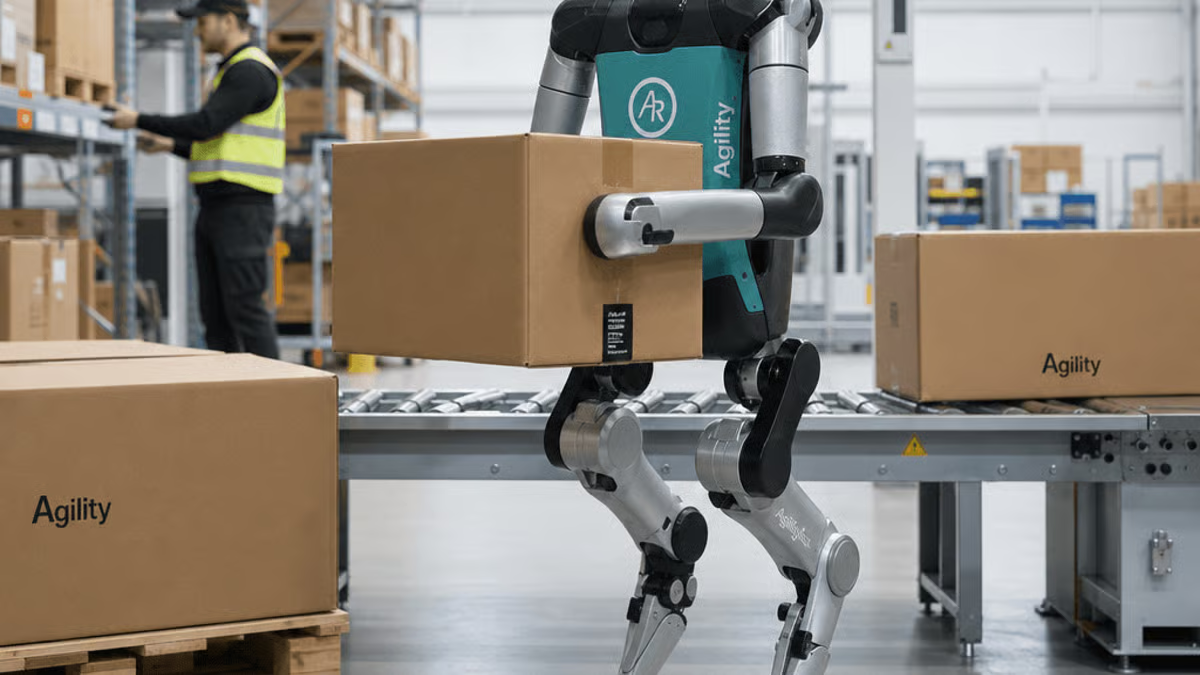
Agility Robotics, the company behind the bipedal humanoid robot Digit, is taking the SPAC route to go public – but don’t expect its CEO to promise you a personal robot butler anytime soon. While competitors chase flashy consumer demos and sky-high valuations, Agility is betting its public market debut on something decidedly less sexy: execution in enterprise warehouses and logistics. The move signals a pragmatic shift in the humanoid robotics space, where hype is starting to meet the hard reality of commercialization.
Agility Robotics just threw cold water on the humanoid robot hype cycle. The Oregon-based company, which makes Digit, a bipedal robot designed to handle boxes and packages in warehouses, announced it’s going public through a SPAC merger. But in a refreshing break from the industry’s tendency to overpromise, CEO Peggy Johnson isn’t selling dreams of robots folding your laundry or making you breakfast.
The company’s approach stands in stark contrast to the rest of the humanoid robotics field, where startups routinely showcase slick demos of robots doing backflips, pouring drinks, or navigating living rooms. While those videos rack up millions of views and help fuel massive fundraising rounds, Agility is doubling down on the decidedly unsexy work of moving totes in fulfillment centers.
“We’re focused on solving real problems for enterprise customers right now,” Johnson told TechCrunch in an interview. It’s a statement that reflects hard-won wisdom in the robotics industry, where the gap between lab demos and commercial deployment has humbled countless startups over the past decade.
The SPAC route itself tells a story about where the robotics market is heading. Special purpose acquisition companies fell out of favor after the 2021 boom turned to bust, with many high-profile mergers underperforming badly. But for a capital-intensive business like humanoid robotics – where development costs are massive and revenue timelines are long – a SPAC can provide the runway needed without the pressure of traditional IPO roadshows.
Agility has already deployed Digit robots with major logistics customers, giving it a head start on commercialization that many competitors lack. The bipedal design allows Digit to navigate human-designed spaces like stairs and narrow aisles, solving real constraints in existing warehouse infrastructure. That practical focus has won contracts, even if it doesn’t generate the same buzz as consumer-facing demos.
The timing is notable. Tesla has been teasing its Optimus humanoid robot, while startups like Figure AI have raised hundreds of millions at valuations topping $2 billion. OpenAI and Microsoft have both invested in humanoid robotics ventures, betting that advances in AI will finally unlock the decades-old dream of general-purpose robots. But Agility’s public market move suggests investors are starting to value actual deployments over potential.
Johnson’s background adds credibility to the execution-focused pitch. The former Qualcomm executive and Magic Leap CEO joined Agility in 2022, bringing Silicon Valley operating experience to a company that emerged from Oregon State University research labs. Her tenure has coincided with Agility opening a manufacturing facility capable of producing thousands of Digit units annually – the kind of scaling infrastructure that matters more to institutional investors than viral YouTube clips.
The humanoid form factor itself remains controversial in robotics circles. Critics argue that wheeled robots or specialized manipulators can handle most tasks more efficiently. But Agility’s bet is that existing facilities weren’t built for robots – they were built for humans. Rather than retrofitting every warehouse in America, humanoid robots can slot into existing workflows.
Still, the lack of consumer promises is striking. Where competitors talk about robots that will eventually cook, clean, and provide companionship, Johnson is steering clear of that narrative entirely. It’s a calculated risk: consumer applications drive imagination and media coverage, which can fuel valuations. But they also invite skepticism when timelines slip, as they inevitably do in robotics.
The SPAC structure will provide capital for Agility to scale manufacturing and expand deployments, but it also brings public company scrutiny. Quarterly earnings calls and investor pressure could test the company’s measured approach if growth doesn’t meet expectations. Public market investors have shown little patience for robotics companies that miss milestones, as several struggling robotics IPOs from recent years demonstrate.
What’s clear is that Agility is betting the future of humanoid robotics isn’t in your home – at least not yet. The company is building toward a world where robots handle the physical labor in logistics networks, freeing humans for higher-value work. It’s not as glamorous as a robot chef, but it might actually be a business.
Agility’s SPAC debut marks a turning point for the humanoid robotics industry – one where execution starts mattering more than imagination. While the consumer robot dream continues to captivate founders and fuel fundraising, Agility is making a calculated bet that public market investors will reward real deployments over speculative promises. Whether that pragmatism pays off depends on whether enterprise customers adopt humanoid robots fast enough to justify the manufacturing scale-up. But in an industry known for overpromising and underdelivering, a little realism might be exactly what investors are looking for. The robot revolution may not start in your living room after all – it’ll start in the warehouse down the street.











Leave a Reply