
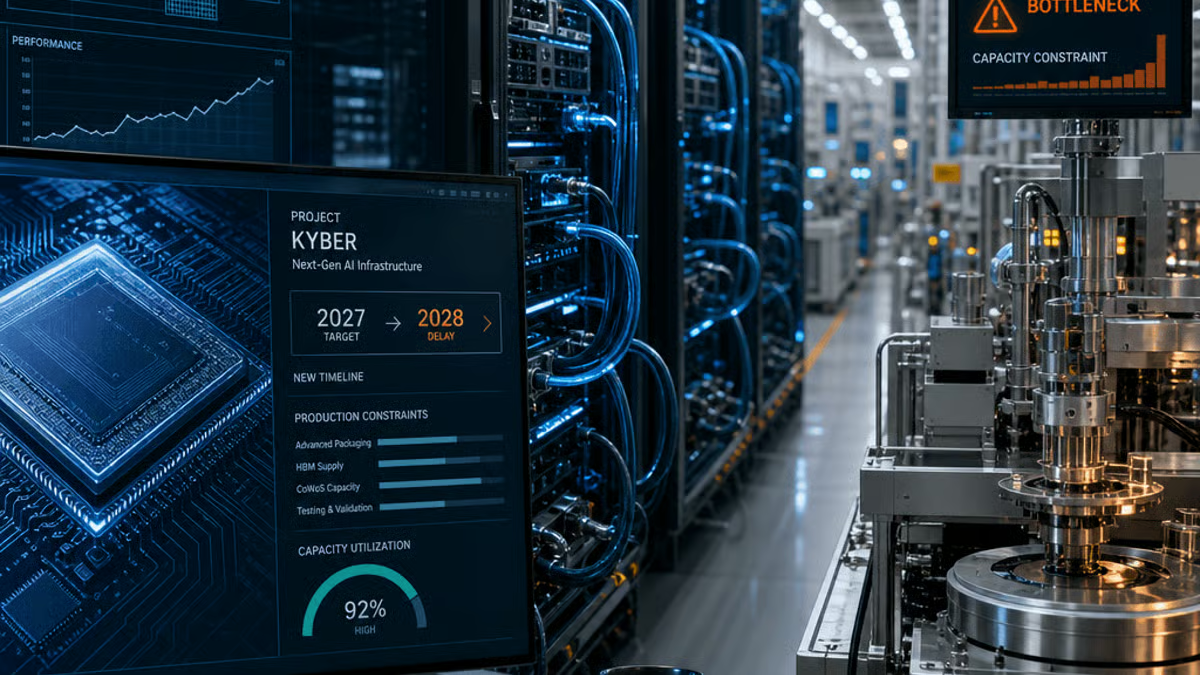
Nvidia’s ambitious plan to ship a new generation of AI infrastructure every year just hit a wall. The company’s next-generation Kyber rack system won’t arrive until 2028, according to a report from SemiAnalysis, marking a significant setback for the chip giant’s aggressive release schedule. The delay exposes growing tensions between Nvidia’s breakneck product roadmap and the physical limits of modern semiconductor manufacturing, raising questions about whether the AI boom’s leading supplier can maintain its torrid pace.
Nvidia has spent the past three years moving at warp speed, shipping new AI accelerators and rack systems on a relentless annual drumbeat. But that momentum just slammed into manufacturing reality. The company’s Kyber rack system, built around its upcoming Rubin chips, won’t ship until 2028 – a full year later than expected, according to semiconductor research firm SemiAnalysis.
The slip represents more than a schedule hiccup. It’s the first concrete sign that Nvidia’s product roadmap is outrunning the capabilities of its manufacturing partners in Taiwan. The delay comes as TSMC, Nvidia’s primary foundry partner, juggles record demand from multiple AI chip makers while trying to bring next-generation production processes online.
“We’re seeing the limits of what’s physically possible,” one supply chain executive told industry analysts on background. The Kyber system was supposed to represent a major leap in rack-scale AI computing, packing Nvidia’s Rubin architecture into dense, liquid-cooled configurations that hyperscalers have been pre-ordering for months.
Now those customers – Amazon Web Services, Microsoft Azure, and Google Cloud among them – face an uncomfortable decision. Wait for Kyber, or lock in competing systems from AMD and emerging players that might arrive sooner. According to data center procurement sources, some hyperscalers are already hedging their bets.
The manufacturing snag appears to center on advanced packaging and cooling technologies. Kyber racks were designed to push power density to new extremes, requiring breakthroughs in thermal management and chip-to-chip interconnects. Those innovations, it turns out, need more time to mature at production scale.
Nvidia hasn’t publicly commented on the delay, and the company’s investor relations team declined to provide details. But the timing is particularly awkward. CEO Jensen Huang has spent the past year telling investors and customers that Nvidia would maintain its annual refresh cycle indefinitely, a cadence that became a key selling point as enterprises planned multi-year AI infrastructure investments.
The semiconductor industry has watched Nvidia’s release schedule with a mix of admiration and skepticism. Competitors privately questioned whether the pace was sustainable, especially as chip designs grew more complex and manufacturing processes pushed closer to physical limits. This delay suggests those doubts weren’t unfounded.
For enterprise buyers, the calculus just got messier. Companies that budgeted for 2027 Kyber deployments now need to decide whether to stick with current-generation Nvidia hardware, jump to interim solutions, or take a harder look at alternatives. The AI infrastructure market, once a Nvidia near-monopoly, is suddenly more competitive.
The delay also puts pressure on Nvidia’s revenue projections. Wall Street has priced in continued growth from data center sales, and a year-long gap in the product cycle could create a revenue trough that analysts haven’t modeled. Investors will be watching the company’s next earnings call for any hints about how management plans to smooth the transition.
What’s less clear is whether this represents a one-time stumble or the beginning of a broader slowdown. Nvidia’s roadmap through 2030 includes even more ambitious architectures and packaging technologies. If Kyber is running into manufacturing constraints now, future generations could face similar or worse delays.
The situation underscores a fundamental tension in the AI hardware race. Chip companies are designing systems that push the boundaries of what’s manufacturable, while foundries struggle to scale new processes fast enough to meet demand. Something had to give, and in this case, it’s Nvidia’s timeline.
Nvidia’s Kyber delay is a watershed moment for the AI infrastructure market. It confirms what many suspected: even the industry’s dominant player can’t defy manufacturing physics indefinitely. For customers, this means more uncertainty in planning and potentially more willingness to consider alternatives. For Nvidia, it’s a test of whether the company can manage expectations without losing the momentum that’s made it one of the world’s most valuable companies. The next 18 months will reveal whether this is a temporary setback or the start of a more fundamental shift in how quickly AI hardware can evolve.











Leave a Reply