
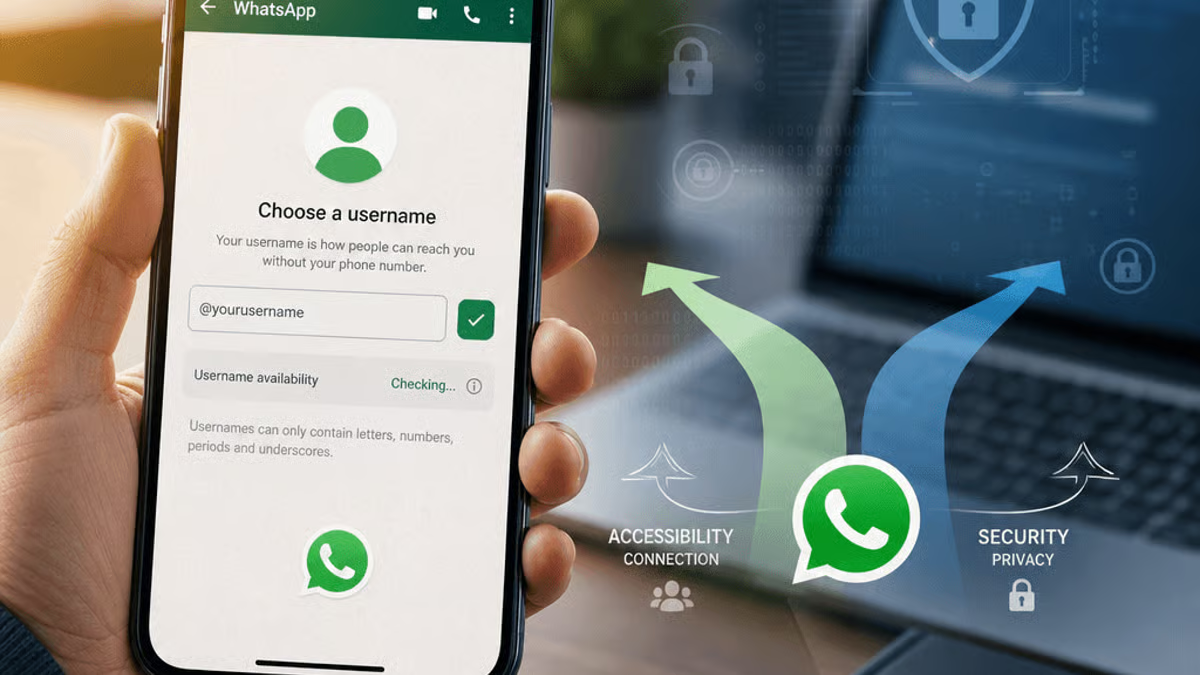
Meta‘s rollout of usernames for WhatsApp is already hitting turbulence. The feature, pitched as a privacy win that lets users connect without sharing phone numbers, is raising red flags among security researchers who worry the messaging giant hasn’t built strong enough guardrails against impersonation scams. With over 2 billion users potentially vulnerable to copycat accounts, the stakes couldn’t be higher for a platform that’s become essential infrastructure for global communication.
WhatsApp‘s username feature just went live, and the security community is already sounding alarms. The new option, which Meta framed as a privacy enhancement, allows users to share a username instead of their phone number when connecting with new contacts. But that convenience may come with a significant downside – making it easier for bad actors to impersonate legitimate accounts.
The concern isn’t theoretical. On platforms like X and Instagram, username-based systems have long struggled with impersonation, even with verification badges and aggressive enforcement. WhatsApp’s implementation appears to lack robust verification mechanisms that could distinguish authentic accounts from copycats, according to security researchers who’ve examined the rollout.
Meta maintains the feature actually strengthens privacy by reducing the need to share phone numbers, which can be used to track users across platforms and databases. The company argues that its existing security measures – including end-to-end encryption and two-factor authentication – provide sufficient protection. But critics counter that encryption protects message content, not identity verification.
The timing is particularly sensitive. WhatsApp has become critical infrastructure for businesses worldwide, with companies using it for customer service, sales, and internal communications. The WhatsApp Business platform now serves over 200 million businesses globally. An impersonation wave could undermine trust in business communications and enable sophisticated fraud schemes.
Early reports suggest scammers are already testing the waters. Security firms monitoring messaging platform abuse have spotted accounts attempting to mimic well-known brands and public figures using similar usernames with slight variations – the classic typosquatting playbook that’s proven effective on other platforms.
The challenge for Meta is balancing accessibility with security. Too many restrictions on usernames could frustrate legitimate users and limit adoption of the feature. But too few safeguards could open the floodgates to impersonation at a scale that makes moderation nearly impossible. With WhatsApp’s massive user base spanning over 180 countries, even a small percentage of abuse translates to millions of potential victims.
Unlike Telegram, which has offered usernames for years alongside verified badges for notable accounts, WhatsApp currently doesn’t provide clear visual indicators to distinguish verified entities from imposters. The app’s minimalist design philosophy, while user-friendly, may work against security transparency in this case.
Industry observers note that Meta could implement several technical solutions – verification badges for businesses and public figures, restrictions on username changes, or machine learning systems to detect suspicious account creation patterns. The company has deployed similar tools on Facebook and Instagram with mixed results.
The broader question is whether Meta will act preemptively or wait for a high-profile impersonation incident to force changes. The company’s track record suggests a reactive approach, implementing stronger safeguards after problems emerge rather than before. That pattern may not serve WhatsApp well given its role in sensitive business and personal communications.
For users, the immediate advice from security experts is straightforward: verify contacts through multiple channels before engaging, especially for financial transactions or sensitive information sharing. Don’t assume a username alone confirms someone’s identity, even if it looks legitimate.
The username rollout represents a significant shift for WhatsApp, which has historically relied on phone numbers as unique identifiers. That system had its own privacy issues, but it also provided a level of verification since phone numbers require carrier authentication. Usernames eliminate that friction – and that layer of identity confirmation.
Meta’s username feature for WhatsApp showcases the eternal tension between privacy and security in product design. While removing phone number requirements addresses legitimate privacy concerns, the absence of robust verification mechanisms creates new attack vectors for impersonation and fraud. With WhatsApp serving as communication backbone for billions of users and millions of businesses, the platform can’t afford to treat identity verification as an afterthought. The next few weeks will reveal whether Meta learned from impersonation problems on its other platforms or if WhatsApp users will become the latest testing ground for social engineering attacks at massive scale.









Leave a Reply