
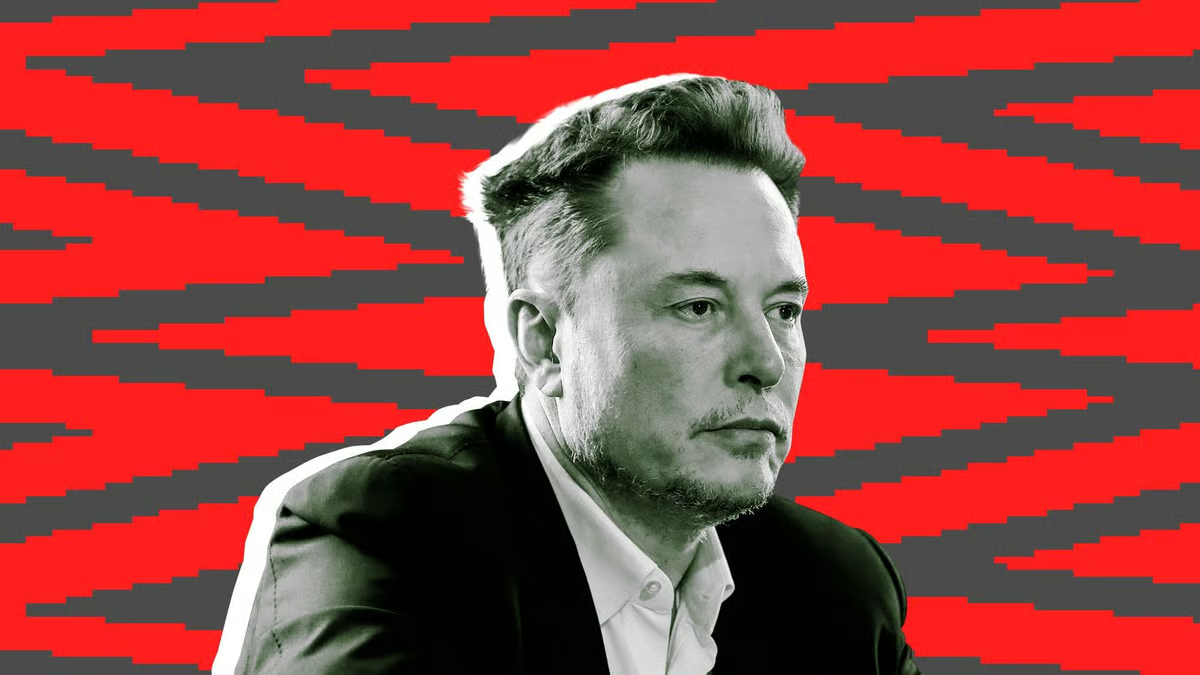
Elon Musk is calling BS on reports of a SpaceX smartphone. The billionaire CEO took to X Wednesday evening to label a Wall Street Journal report about an AI-powered phone prototype as “utterly false,” directly contradicting claims that SpaceX demoed a handset to investors ahead of its blockbuster IPO last month. The denial creates immediate confusion about SpaceX’s hardware ambitions and raises questions about what investors were actually shown during the company’s record-breaking public offering roadshow.
Elon Musk just threw cold water on one of the week’s most intriguing tech stories. In a post on X Wednesday evening, Musk flatly denied that SpaceX showed investors a prototype AI phone, calling The Wall Street Journal’s report “utterly false.” The denial creates immediate whiplash for an industry that spent the day dissecting what a SpaceX phone might mean for Apple, Samsung, and the broader smartphone market.
The WSJ story, published Wednesday morning, painted a vivid picture of SpaceX’s alleged hardware ambitions. According to the report, the company showed select investors a “handset-like prototype” that was slimmer than an iPhone and would run on a Qualcomm Snapdragon chip. The device would supposedly feature its own AI-enabled operating system powered by xAI, the artificial intelligence company Musk merged with SpaceX earlier this year. The demo allegedly happened before SpaceX’s record-breaking IPO in June, which raised over $15 billion.
But Musk’s two-word denial on X – “utterly false” – suggests something else entirely. Either the WSJ’s sources were mistaken about what they saw, SpaceX showed investors something that wasn’t actually a phone prototype, or Musk is pushing back on details while leaving room for a different kind of hardware play. The timing is particularly awkward given that SpaceX just went public with extensive disclosures about its business strategy.
The plot thickens when you consider recent reporting about SpaceX’s telecom ambitions. Just last week, The Financial Times reported that SpaceX COO Gwynne Shotwell told investors the company is considering competing directly with carriers like AT&T, T-Mobile, and Verizon. That would make sense given SpaceX’s Starlink satellite network, which already provides internet connectivity globally. A SpaceX phone could theoretically bypass traditional carriers entirely by connecting directly to Starlink satellites.
The xAI angle adds another layer of intrigue. Musk merged SpaceX with xAI and X earlier this year, creating a tech conglomerate with capabilities spanning space infrastructure, social media, and artificial intelligence. An AI-native smartphone operating system would be the logical consumer-facing product tying those assets together. But if no prototype exists, what exactly is SpaceX planning with its xAI integration?
Qualcomm declined to comment on the original WSJ report, and the chipmaker hasn’t responded to requests for comment following Musk’s denial. The company has been aggressively pushing its Snapdragon chips as the foundation for AI-powered devices, partnering with everyone from Microsoft to Samsung. A SpaceX phone would have been a major validation of Qualcomm’s strategy, but that opportunity now appears to be in question.
For investors who participated in SpaceX’s IPO, Musk’s denial creates an awkward situation. If the WSJ’s sources were accurate about seeing some kind of device demonstration, what were they actually shown? And if they misinterpreted what SpaceX presented, what does that say about the company’s communication with investors during the IPO process? SpaceX shares traded relatively flat in after-hours following Musk’s denial, suggesting the market either doesn’t believe a phone was central to the investment thesis or is waiting for more clarity.
The smartphone market has been notoriously difficult for new entrants to crack. Amazon tried and failed with the Fire Phone. Facebook explored hardware before pivoting to VR. Even Microsoft couldn’t make Windows Phone work despite years of investment and Nokia’s manufacturing expertise. But SpaceX would bring unique advantages – global satellite connectivity, an AI platform in xAI, and Musk’s proven ability to disrupt established industries. That’s assuming a phone actually exists.
Musk has a complicated history with public denials. He’s previously called reporting “false” only for details to emerge later showing the stories were largely accurate, just premature. He’s also been known to parse words carefully, denying specific details while broader narratives prove true. In this case, his denial is unequivocal, but it doesn’t address what SpaceX might be planning for consumer hardware more broadly.
The contradiction also raises questions about The Wall Street Journal’s sourcing. The paper typically has strong connections to the investment community and carefully vets claims about what companies show investors. For Musk to so flatly contradict the report suggests either a significant breakdown in the paper’s editorial process or a genuine misunderstanding by sources about what they witnessed during SpaceX’s IPO roadshow.
Musk’s denial leaves the tech industry in an awkward position, forcing everyone to recalibrate their assumptions about SpaceX’s consumer hardware strategy. The contradiction between the WSJ’s reporting and Musk’s flat rejection suggests either a significant miscommunication during the IPO process or strategic misdirection about SpaceX’s plans. What’s clear is that SpaceX is exploring ways to leverage its satellite infrastructure and AI capabilities for consumer products – whether that takes the form of a smartphone, a different kind of device, or pure software remains anyone’s guess. For now, the only certainty is that whatever SpaceX showed investors, Musk doesn’t want it described as a phone prototype.






Leave a Reply