
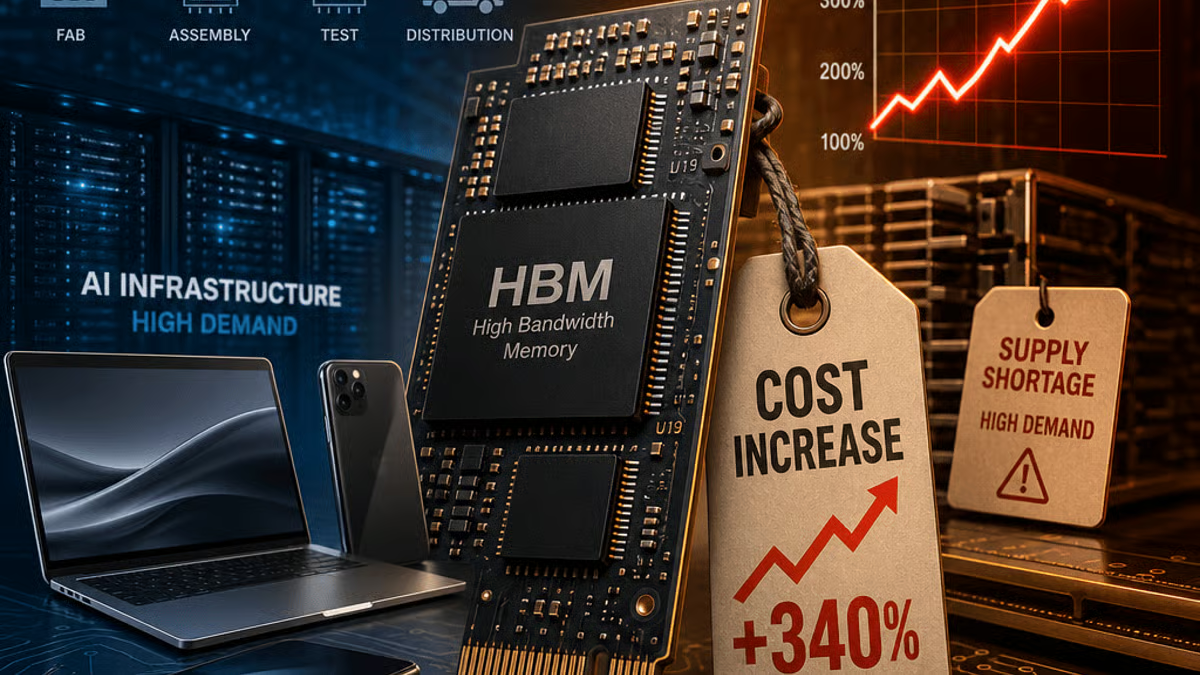
The AI boom just hit consumer wallets. Apple and Microsoft are raising prices on key devices as memory costs skyrocket, while smaller electronics makers face what industry insiders are calling an existential threat. The crunch, driven by insatiable demand for high-bandwidth memory in AI data centers, is reshaping the entire consumer electronics landscape and exposing the brutal reality of competing for chips in an AI-first world.
Apple and Microsoft just passed their AI infrastructure headaches down to consumers. Both tech giants are implementing price increases across key product lines as the cost of memory chips surges, driven by unprecedented demand from companies building out AI data centers. But while Apple and Microsoft can absorb some of the pain and lean on their pricing power, smaller consumer electronics makers are staring down a far grimmer reality.
The memory crunch centers on high-bandwidth memory (HBM), the specialized chips that power everything from AI accelerators to premium laptops and smartphones. As companies like OpenAI, Microsoft, and Google race to build massive AI training clusters, they’re effectively outbidding traditional consumer electronics manufacturers for limited memory supply. Industry sources familiar with procurement negotiations say smaller players simply can’t compete when tech giants are willing to pay premium prices and lock in multi-year contracts.
For Apple, the calculus is straightforward: raise prices modestly on MacBooks and high-end iPads, bank on brand loyalty, and maintain margins. Microsoft is taking a similar approach with Surface devices and potentially Xbox consoles. Both companies have the market positioning and customer base to weather consumer pushback. According to supply chain analysts, Apple’s purchasing volume and cash reserves give it priority access to memory supplies that smaller brands can only dream about.
But companies operating on thinner margins and smaller scales face a different equation entirely. Mid-tier laptop makers, gaming peripheral manufacturers, and emerging smartphone brands are getting squeezed from both sides – memory costs are climbing while their ability to raise prices remains limited by fierce competition. Some are already scaling back production plans or delaying product launches until the supply situation stabilizes.
The AI infrastructure buildout shows no signs of slowing. Nvidia reported record data center revenue last quarter, and cloud providers continue announcing massive capital expenditure plans focused on AI compute. Each new GPU cluster requires mountains of HBM, creating sustained pressure on memory production capacity. Major memory manufacturers like SK Hynix, Samsung, and Micron have announced expansion plans, but new fabrication capacity takes years to come online.
What makes this shortage particularly brutal is its timing. Consumer electronics companies were just emerging from years of pandemic-era supply chain chaos and the subsequent inventory correction. Now they’re facing another supply constraint, but this one has a powerful new competitor: AI companies with deep pockets and strategic imperatives to secure compute resources at any cost. The traditional consumer electronics playbook of managing through short-term shortages doesn’t work when your competitor is willing to pay 2x or 3x for the same components.
Industry analysts say we’re witnessing a fundamental reordering of semiconductor supply chain priorities. AI infrastructure has moved from a niche concern to the primary driver of demand for cutting-edge chips and memory. Consumer electronics, long the dominant force in semiconductor economics, is getting bumped down the priority list. For smaller players without the purchasing power or strategic relationships of an Apple or Microsoft, that shift could prove fatal.
The price increases also signal something broader about the AI economy’s ripple effects. The same technology promising productivity gains and new capabilities is simultaneously driving up costs across the hardware stack. Consumers are essentially subsidizing the AI buildout through higher device prices, whether they care about AI features or not. It’s a hidden tax that’s only going to become more visible as memory shortages persist.
The memory shortage crystallizes a hard truth about the AI era: when tech giants compete for resources, someone gets squeezed out. Apple and Microsoft will weather this storm with price increases and margin compression. Smaller consumer electronics companies face tougher choices – accept razor-thin margins, delay products, or exit categories entirely. As AI infrastructure continues its voracious consumption of cutting-edge semiconductors, expect this pattern to repeat across the hardware stack. The question isn’t whether consumers will pay more, but how many smaller players survive long enough to see supply normalize.










Leave a Reply