
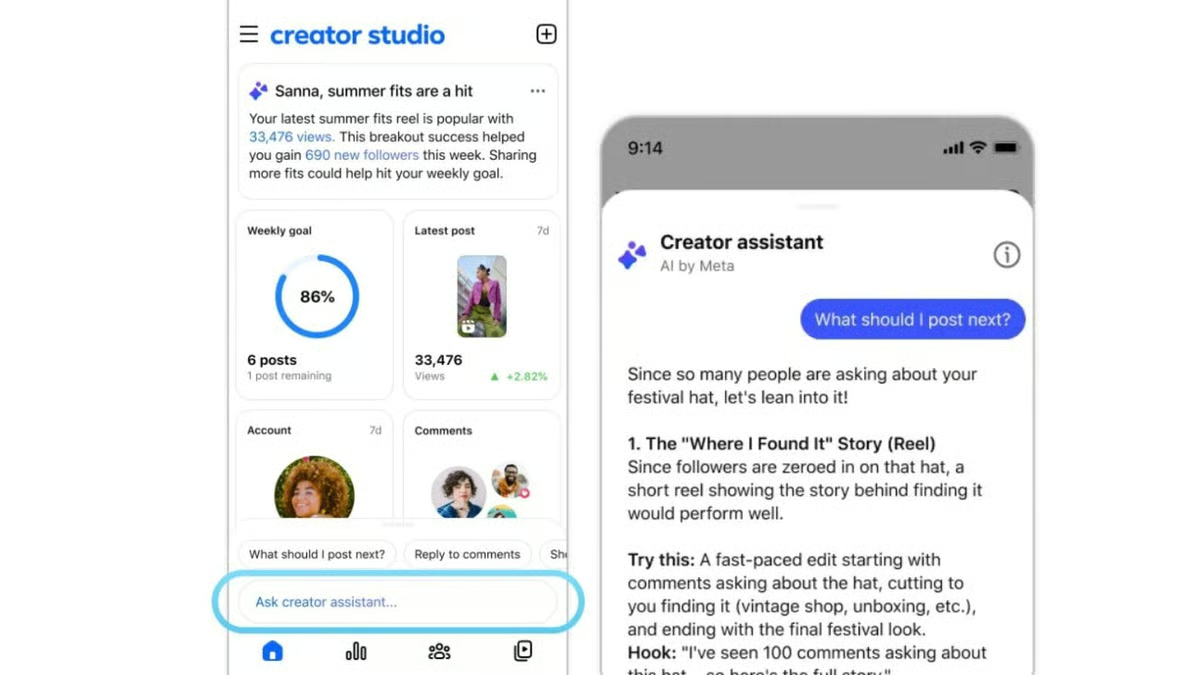
Meta is bringing Creator Studio back from the dead. The Facebook page management tool, shuttered in 2023, is relaunching as a standalone AI companion app built around automated engagement and performance insights. At its core sits Meta’s AI Creator Assistant, a chatbot designed to analyze metrics, draft personalized comment replies, and tell creators exactly how to grow their audiences. It’s Meta’s latest push to keep creators anchored to Facebook as competition for talent intensifies across TikTok, YouTube, and emerging platforms.
Meta just pulled off a resurrection. The company’s Creator Studio management tool, unceremoniously killed off in 2023, is coming back as something completely different—an AI-powered growth assistant that promises to automate the grunt work of building an audience on Facebook.
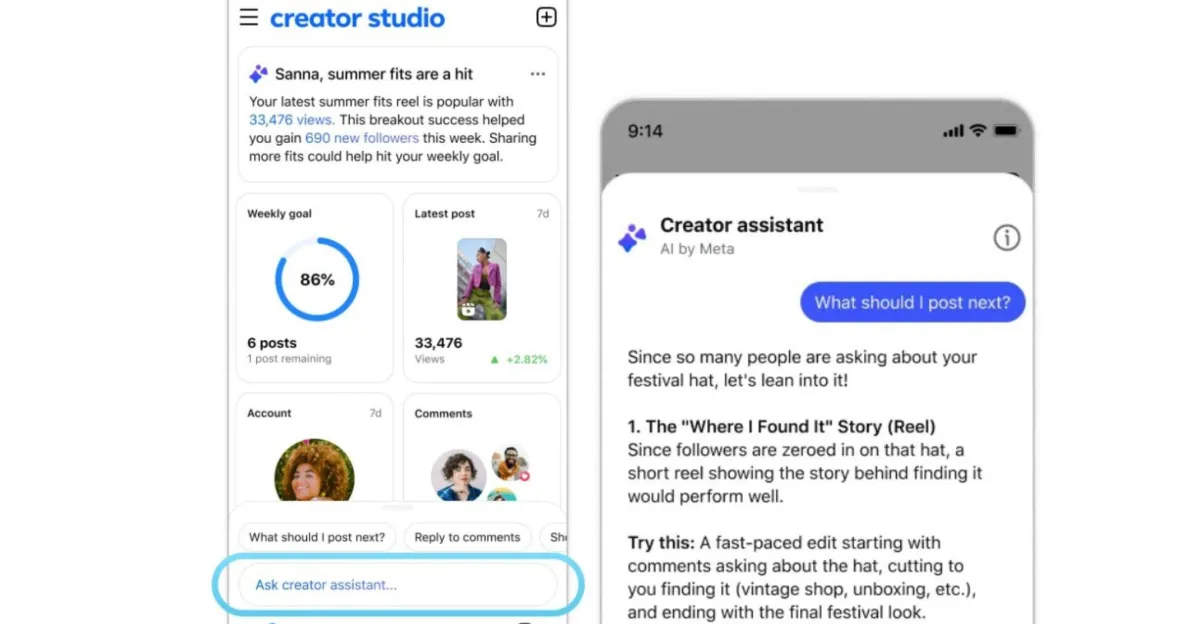
The reimagined Creator Studio now centers on Meta’s AI Creator Assistant, a chatbot that analyzes performance data and serves up tailored recommendations for boosting engagement. Creators can ask it to surface their most important comments, track metrics across posts, and even generate replies that supposedly match their personal voice. According to Meta’s official announcement, the goal is to show creators “exactly how to grow on Facebook.”
It’s a dramatic pivot from the original Creator Studio, which launched as a desktop-first dashboard for managing posts and analyzing basic metrics. That version got shuttered alongside Meta’s broader Creator Studio suite as the company consolidated its tools. Now it’s back as a mobile-first AI companion, betting that automation can solve what manual dashboards couldn’t—keeping creators engaged and producing content consistently.
The AI assistant can identify high-priority comments from a creator’s audience and instantly draft responses. Meta says these replies come “in your voice,” though the company hasn’t detailed how the system learns individual writing styles or what safeguards exist against generic, bot-like responses. The feature walks a fine line between efficiency and authenticity—a tension that’s become central to AI-powered social tools.
Behind the relaunch is Meta’s increasingly desperate fight to retain creator talent. TikTok continues to dominate short-form video, while YouTube locks in long-form creators with its lucrative Partner Program. Facebook, meanwhile, has struggled to maintain relevance with younger creators who view it as their parents’ platform. AI-powered growth tools represent Meta’s attempt to compete on infrastructure rather than cultural cachet.
The timing aligns with Meta’s broader AI push across its product lineup. CEO Mark Zuckerberg has repeatedly emphasized AI as the company’s top priority, from Meta AI chatbots in WhatsApp to AI-generated content recommendations across Instagram and Facebook feeds. Creator Studio’s AI assistant fits squarely into this strategy—using large language models to make Meta’s platforms stickier for the people who generate content.
But there’s a catch. Meta hasn’t disclosed which markets will get access first, whether there’s a waitlist, or when the app will become widely available. The announcement mentions the app “isn’t widely available” yet, leaving creators guessing about rollout timelines. That lack of clarity is typical for Meta’s creator-focused launches, which often start with limited tests before scaling.
The competitive landscape has shifted dramatically since Creator Studio’s original run. YouTube Studio has become the gold standard for creator analytics, offering deep insights into watch time, audience retention, and revenue. TikTok’s Creator Center provides trend analysis and viral content breakdowns. Meta’s betting that AI-driven recommendations can leapfrog these incumbents by making the insights more actionable and the engagement work less manual.
There’s also the question of trust. Automated comment replies could backfire if they feel impersonal or miss nuance, especially for creators who’ve built their brands on authentic community interaction. The promise of replies “in your voice” sounds impressive but raises questions about how the AI handles sensitive topics, conflict, or comments that require genuine human judgment.
Meta’s announcement doesn’t include data on early testing, adoption rates, or creator feedback from beta users. That silence suggests the company’s still figuring out product-market fit, even as it pushes the relaunch publicly. The lack of performance benchmarks or case studies is notable, especially for a tool explicitly designed to demonstrate “exactly how to grow.”
The Creator Studio revival also highlights Meta’s willingness to reverse product decisions when strategic priorities shift. Killing the original tool signaled a move toward consolidated, platform-agnostic creator tools. Bringing it back as an AI-first mobile app shows how quickly the company’s calculus can change when new technologies—and competitive threats—emerge.
Meta’s Creator Studio reboot is a high-stakes bet that AI can solve its creator retention problem. By automating performance insights and engagement work, the company hopes to make Facebook competitive again for content producers who’ve largely moved on to TikTok and YouTube. But the strategy hinges on execution—whether the AI assistant actually delivers useful recommendations, whether automated replies feel authentic, and whether creators trust Meta enough to hand over their audience interactions to a chatbot. The real test won’t be the technology itself but whether it can reverse Facebook’s slide into irrelevance among the creators who matter most.









Leave a Reply