
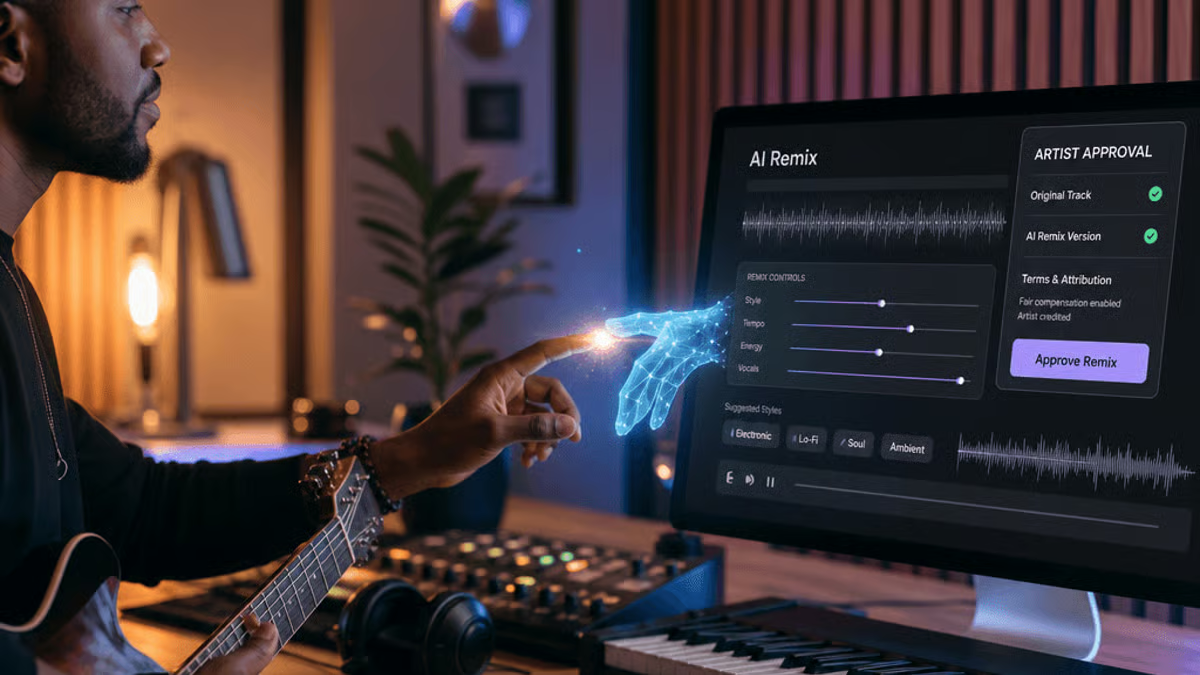
Deezer is breaking ranks with the AI music industry’s move-fast-and-ask-questions-later approach. The global streaming service just unveiled a new remix feature that lets fans create AI-powered song variations, but with a twist that’s raising eyebrows across the industry – it requires explicit artist consent. While competitors race to deploy AI music tools amid legal uncertainty, the Paris-based platform is betting that artist partnerships will define the future of AI-generated content.
Deezer just threw down a gauntlet in the AI music wars, and it’s not the one anyone expected. The streaming platform announced today it’s rolling out an AI-powered remix tool that lets fans reimagine their favorite tracks, but there’s a catch that sets it apart from every other player in the space – artists get to say yes or no first.
The timing couldn’t be more pointed. As OpenAI and others plow ahead with music generation tools that have artists and labels threatening legal action, Deezer is taking what the company calls a “contrarian approach.” Instead of moving fast and breaking things, they’re moving deliberately and asking permission. It’s a stark departure from the tech industry’s usual playbook, and it’s happening at a moment when the entire music AI sector is holding its breath waiting for the first major copyright lawsuit to land.
The feature works like you’d expect – fans can tweak songs, adjust elements, create variations – but only on tracks where the artist has explicitly opted in. That’s the kicker. While competitors are training models on vast catalogs of music without asking, Deezer is building a permission-based system from the ground up. It’s slower, it’s messier, and it dramatically limits the initial catalog. But it also might be the only approach that survives the legal reckoning everyone knows is coming.
Deezer isn’t exactly swimming in cash to fight protracted legal battles. The company operates in a streaming market dominated by Spotify, Apple Music, and Amazon Music, where margins are thin and artist payouts are a constant source of tension. With around 9.6 million subscribers globally – a fraction of Spotify’s 600 million-plus users – the French platform can’t afford to alienate the creative community it depends on.
The move also reflects a broader shift in how music platforms are thinking about AI. After years of using algorithmic recommendations to drive engagement, streaming services are now wrestling with generative AI that doesn’t just suggest music but creates it. That’s a fundamentally different proposition, one that goes to the heart of what it means to be a music platform. Are you distributing art or manufacturing it?
What makes Deezer’s approach particularly interesting is the potential ripple effect. If artist-approved AI tools gain traction with fans, it could pressure other platforms to adopt similar consent frameworks. We’ve already seen this play out with other creator-focused features – once one platform establishes a creator-friendly precedent, others often follow to avoid backlash. The alternative is a landscape where platforms rush ahead with AI features, face coordinated artist boycotts or legal action, and eventually implement consent systems anyway, but only after burning trust and money.
There’s also a competitive angle here that shouldn’t be overlooked. By positioning itself as the artist-friendly platform, Deezer could attract musicians who feel bulldozed by bigger competitors. Exclusive remix opportunities could become a differentiation tool, giving artists a reason to prioritize Deezer in their distribution strategy. It’s a long shot in a market dominated by giants, but it’s one of the few strategic openings available to a smaller player.
The broader music industry is watching closely. Labels and publishers are already negotiating AI licensing deals worth hundreds of millions of dollars, trying to establish precedents before the technology runs too far ahead of the legal framework. Artist advocacy groups are demanding transparency and consent mechanisms. And musicians themselves are split – some excited about new creative tools, others terrified of being replaced by algorithms trained on their work.
Deezer’s feature lands in this messy middle ground, attempting to give fans AI-powered creativity without steamrolling the people who actually make the music. Whether that balance is commercially viable remains the billion-dollar question. The consent-based approach inherently limits scale in the short term, and scale is what wins in streaming. But if the alternative is costly litigation and artist revolts, slow and steady might be the only path forward.
What we don’t know yet is how many artists will actually opt in, what the user experience looks like, or whether fans will embrace AI remixes that come with built-in limitations. Those details will determine whether Deezer is pioneering the future of music AI or just taking a principled stand that gets steamrolled by competitors willing to move faster and apologize later.
Deezer’s consent-first approach to AI music remixing represents either inspired foresight or a costly miscalculation in a market that rewards speed and scale. By requiring artist approval, the platform is betting that sustainable AI integration requires collaboration rather than disruption. The strategy could attract artists wary of being algorithmically replaced while differentiating Deezer in a crowded streaming landscape. But the real test comes down to whether fans embrace a more limited feature set in exchange for ethical AI, and whether artists see enough value to opt in at scale. As AI music tools face mounting legal scrutiny and creator backlash, Deezer’s approach might be less contrarian and more prescient – a preview of the consent frameworks every platform will eventually need to adopt.









Leave a Reply